22 Jul 2026
OECD lists Colombia as first country to build Culture of Peace Through Tourism
Bangkok — The concept of Facilitating a Culture of Peace Through Tourism is all set to hit mainstream after being prominently highlighted as a major part of the Colombian Tourism Development Strategy in the latest OECD Tourism Trends and Policies 2026 report.
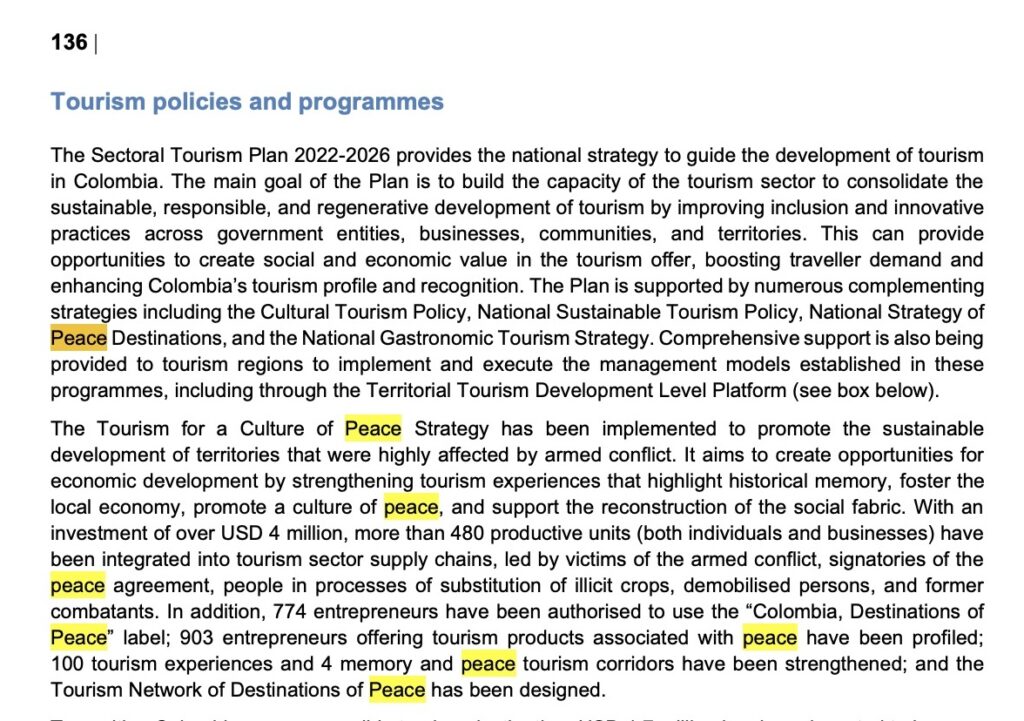
Released on 01 July, the flagship OECD biennial report lists the formerly drugs-infested South American country as the only OECD member state with a formal plan for building Peace Through Tourism. This, by promoting the sustainable development of the reformed regions via tourism experiences which “highlight historical memory, foster the local economy, promote a culture of peace and support the reconstruction of the social fabric.”
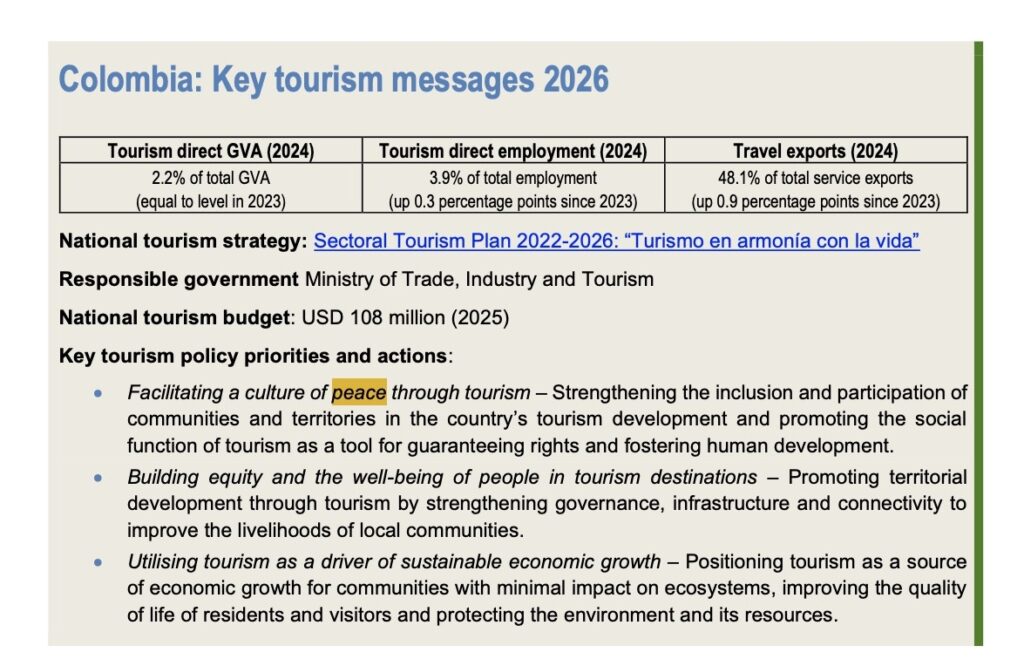
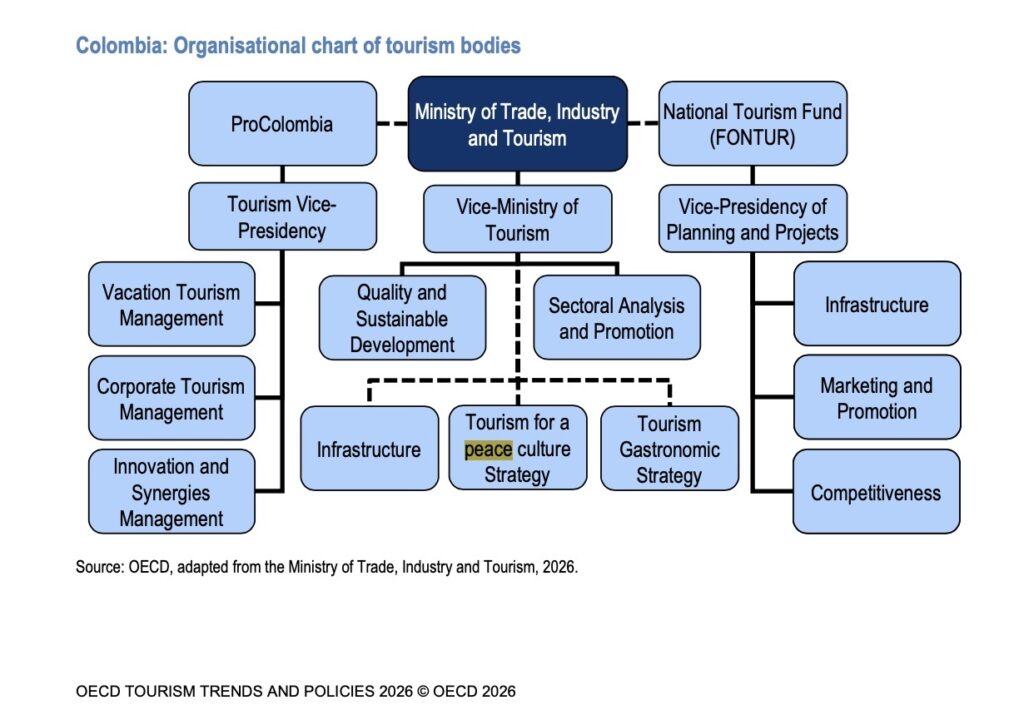
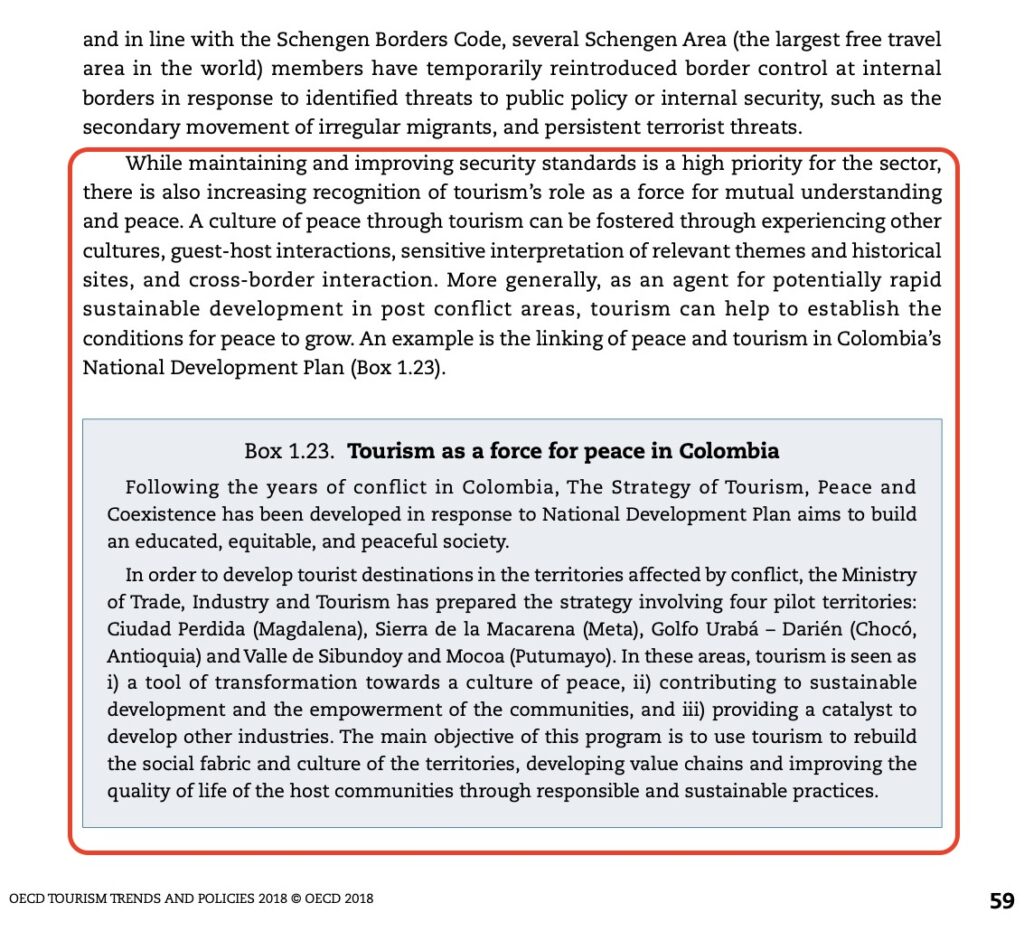
Says the report, “With an investment of over USD 4 million, more than 480 productive units (both individuals and businesses) have been integrated into tourism sector supply chains, led by victims of the armed conflict, signatories of the peace agreement, people in processes of substitution of illicit crops, demobilised persons, and former combatants. In addition, 774 entrepreneurs have been authorised to use the “Colombia, Destinations of Peace” label; 903 entrepreneurs offering tourism products associated with peace have been profiled; 100 tourism experiences and 4 memory and peace tourism corridors have been strengthened; and the Tourism Network of Destinations of Peace has been designed.”
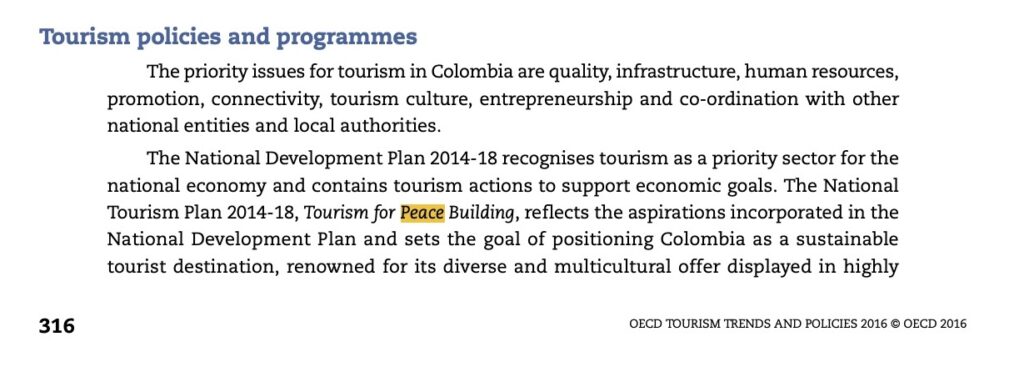
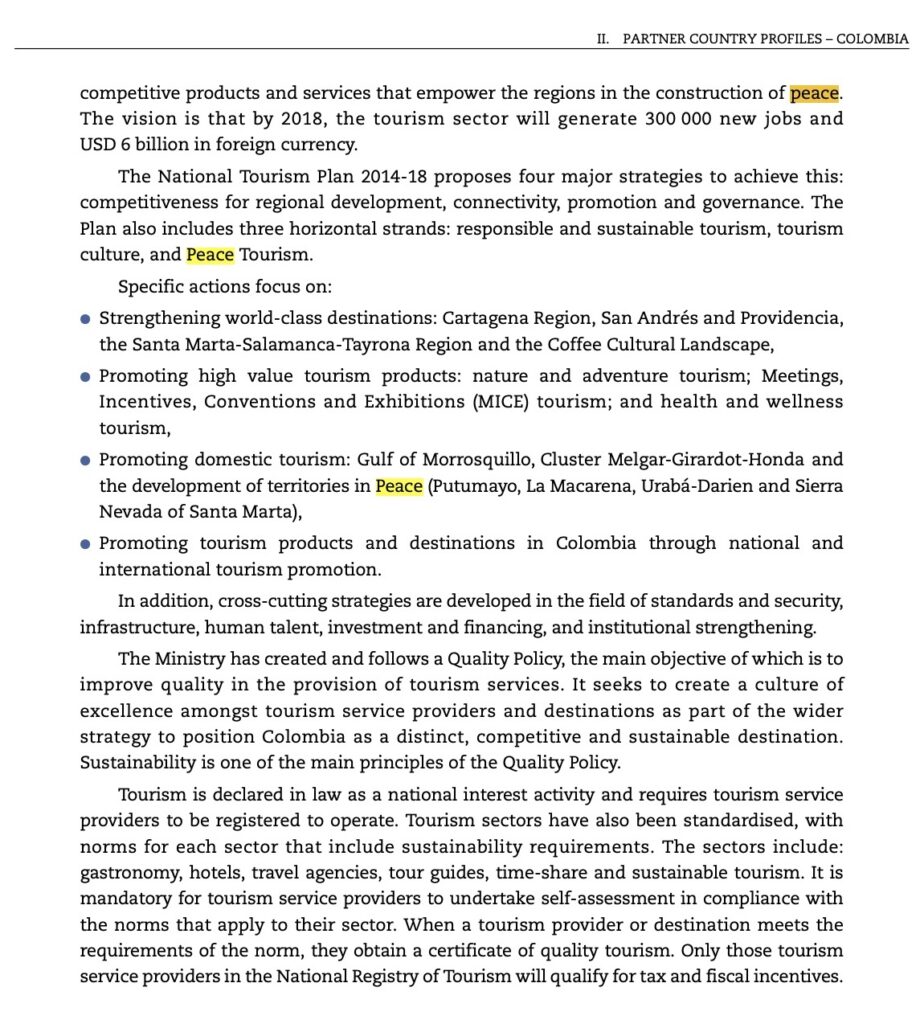
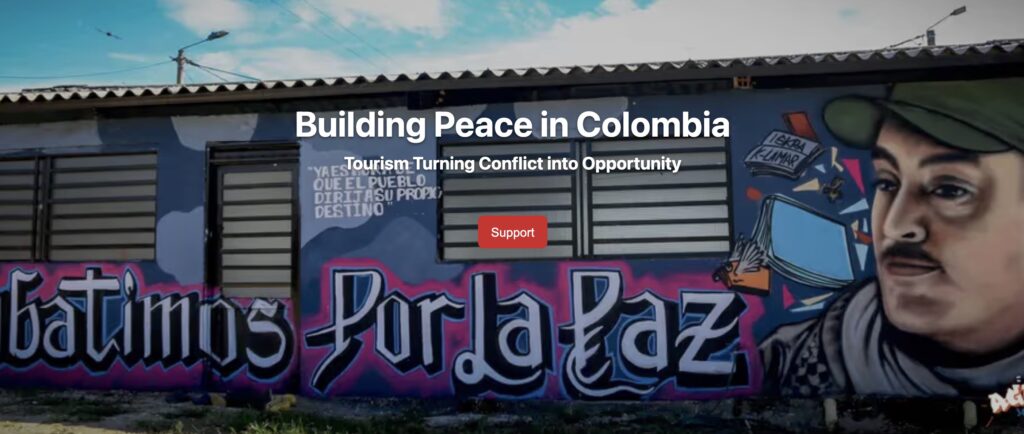
The report indicates that Colombia in fact has had a Peace Tourism policy since 2014 but has now upgraded its relevance. At the ITB Berlin 2023, the Colombian Ministry of Trade, Industry, and Tourism of Colombia launched the “Colombia: Destinations of Peace” seal, inspired by the “Paz Naciente” (Nascent Peace) flower (Elaeagia pacisnasci), discovered in the municipality of El Peñón, Santander in the eastern Colombian Andes, a region that was previously off limits due to the armed conflict.

By conferring that strategy with its seal of recognition and respectability, the OECD has paved the way for an industry-wide chain-reaction, especially in the current conflict-ridden geopolitical environment.
Destinations worldwide will now rush to set up Zones of Peace and Harmony, e.g., war cemeteries, museums, former battlefields, spiritual and religious spots, UNESCO heritage sites, national parks, border regions, and many more. As per its original mandate of Building the Peace in the post-World War II era, the topic will now turn up on the agendas of Travel & Tourism forums and force organisations to start seriously exploring how tourism can become a part of the solution.
Although Travel & Tourism has suffered grievously by disruptions of peace, it has never seriously tabled the impact of wars, conflicts and other threats such as religious extremism, nationalism, jingoism, etc. on the grounds that they were either a “political issue” or beyond control. “Visionary thought-leaders” in both the public and private sectors as well as academics and consultants treated the concept as an abstract theory, useful for speech-making but impractical to implement in reality.
All those perspectives have now been proven misguided and false.
The OECD has mentioned the role of Peace through Tourism in previous reports, such as Ireland after the peace accords which ended former irish Republican Army, and Korea (the brief possibility of peace along the DMZ border and the potential for attracting tourism thence). Those were mainly ad hoc mentions; the Colombian example is a much wider strategy and plan.
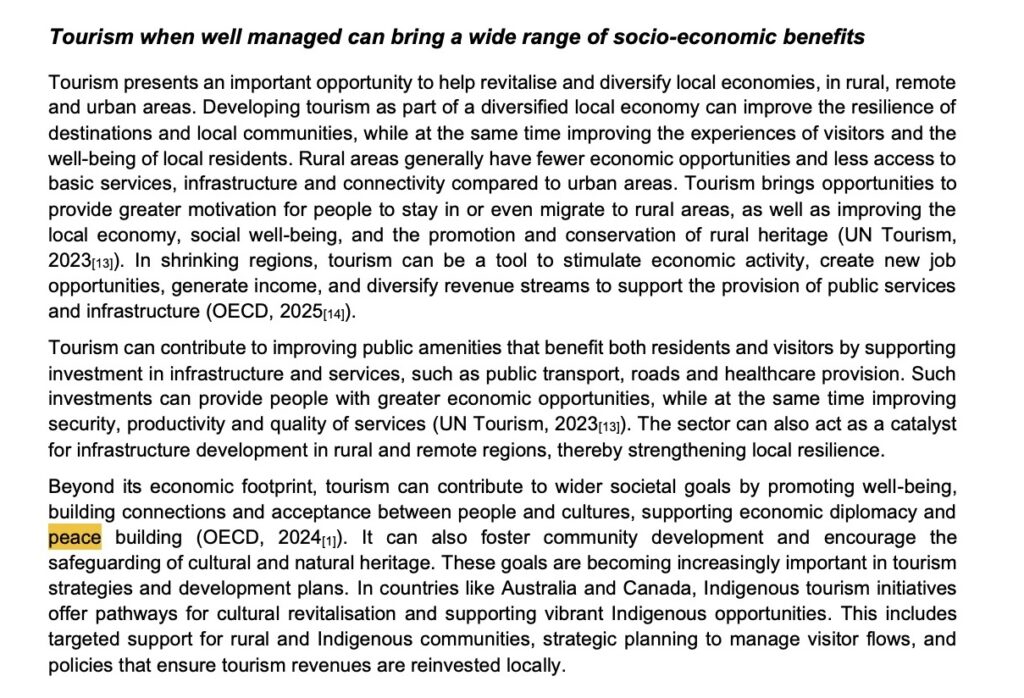
Here is a snapshot of the key messages. All are self-explanatory.
Click here to download the full OECD Tourism report.