28 Aug 2026
Four Formidable Forces converged at the PATA Travel Mart in Kuching
Kuching, Malaysia — The PATA Travel Mart in Kuching, Malaysia, last week was the last major event of PATA’s 75th anniversary year. Four formidable forces converged there which will determine the future of PATA. Read on…
FORCE 1: A GENERATIONAL SHIFT HAS TAKEN PLACE
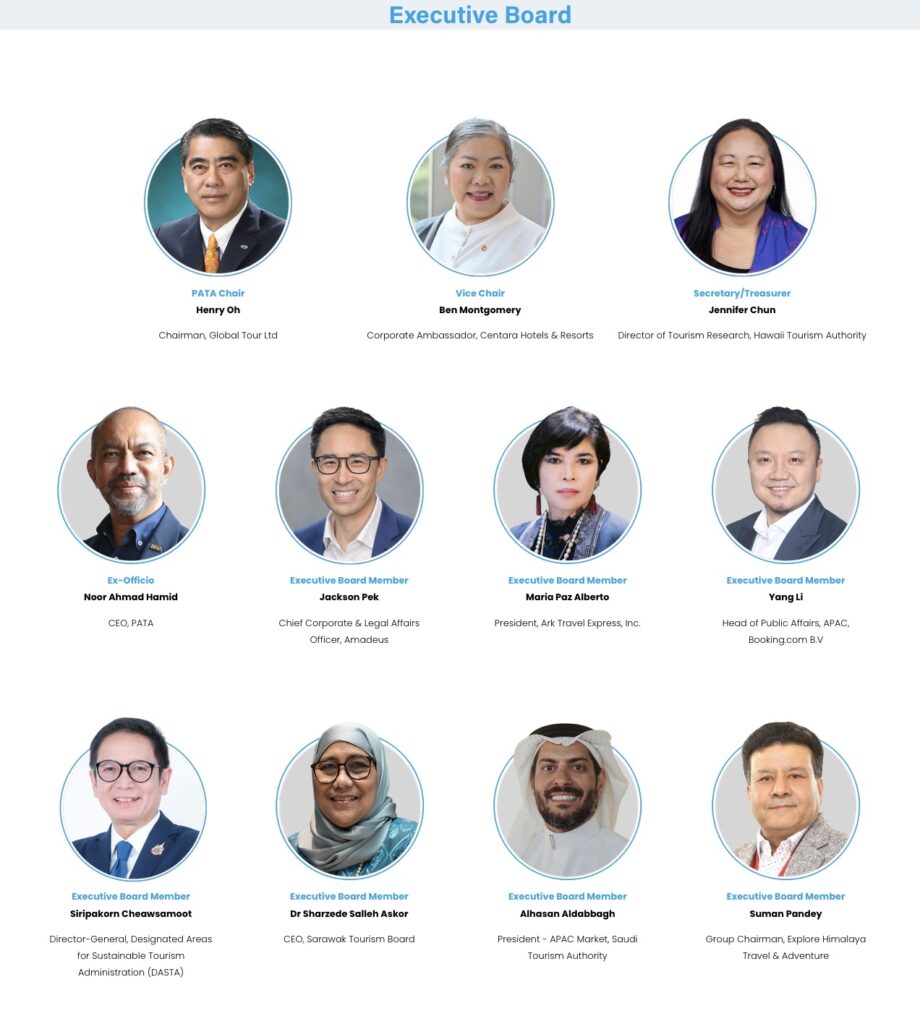
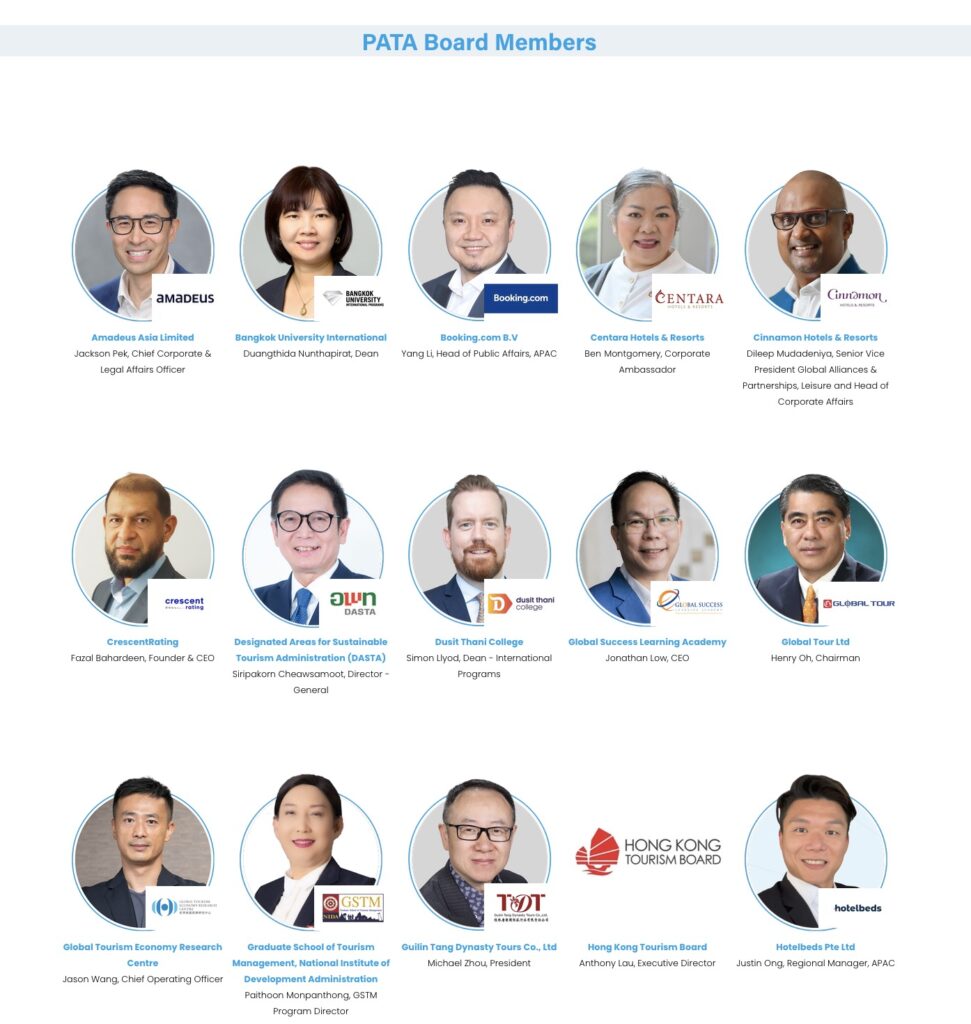
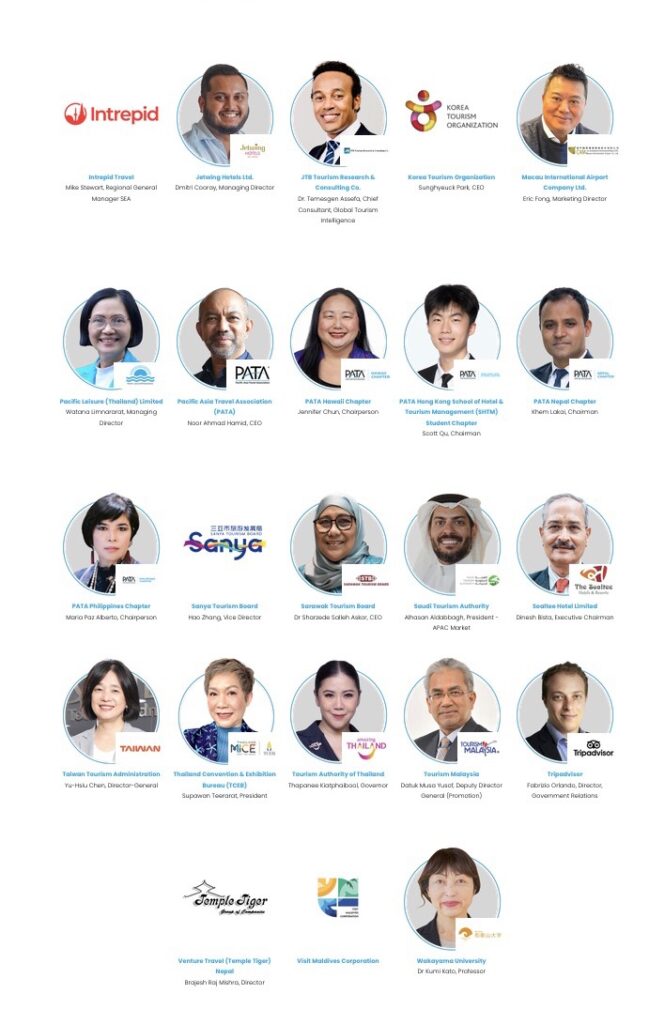
A young generation of executives is now at the PATA decision-making table. I spoke to several of them. They are street-smart, tech-savvy, motivated and eager to apply their collective knowledge for a common good. They are asking the right questions and offering new ideas. Their biggest advantage is that they are free of past baggage of PATA politics and cronyism. While that is certainly a major asset, it is also a potential liability. Because they know little about the history of PATA, and the real reasons for its decline, there is a very real risk they will not learn from past mistakes. That risk of history then repeating itself could become an actual threat in no time.
A demographic analysis of the group also shows that while most of them are Young Gen’s, about 75% are senior employees of corporations and government agencies. If their jobs change, they may have to relinquish their PATA board seats. In the 1980s and 1990s, PATA decision-makers largely comprised of independent corporate owners, which ensured continuity. The fact that Mr Henry Oh, the PATA chairman for 2026-28, is also an independent corporate owner is a major advantage for PATA. The others may come and go but owners stay on. Today, staying the course, ensuring continuity and maintaining focus has become even more important.
FORCE 2: A NEW SET OF CHALLENGES FACING THE WORLD ORDER
One of the top agenda items for the new board in Kuching was to prioritise the challenges facing the PATA region. This is how they rated them:
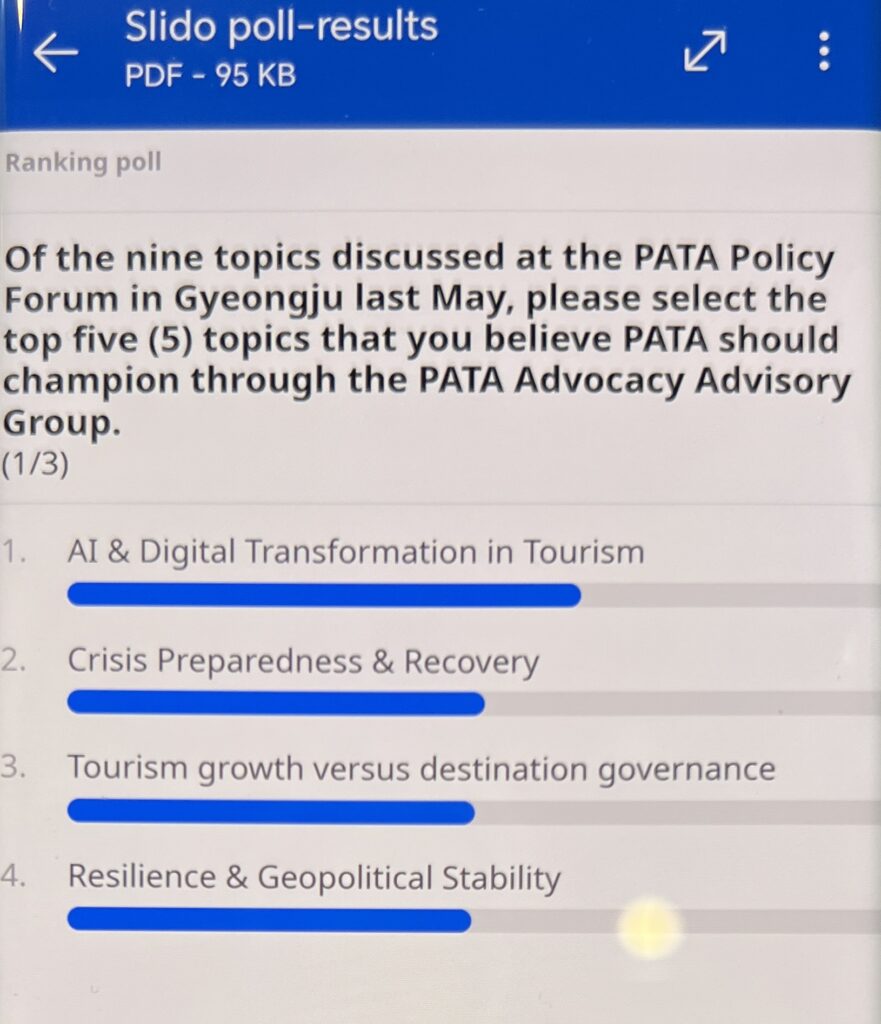
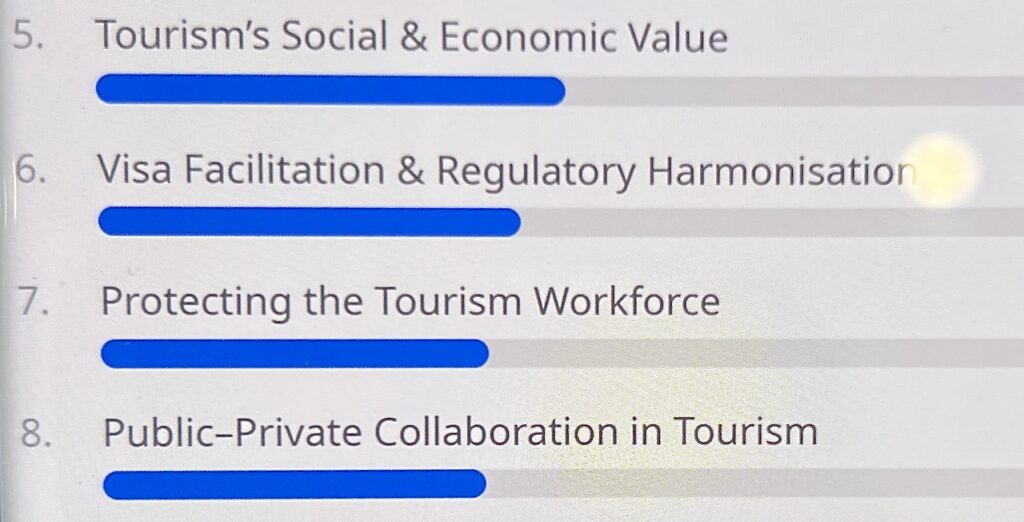

PATA is in the process of setting up an advocacy group and task forces to take up these challenges. But the speed at which these challenges are advancing will require a far more rapid response and collective input than via small group of people meeting every few months. If the discussions keep getting overtaken by events, it will reduce the relevance and practicality of the policy prescriptions, and diminish the value of the effort to a mere talk shop.
PATA’s strategic research partner, the Hong Kong Polytechnic University, has also flagged these challenges but offered no policy prescriptions. External shocks have been the biggest challenge facing the association since it moved to Asia in 1999. They have worsened both in frequency and intensity. The risks and threats are clear. What PATA can/should do about them less so.
FORCE 3: A NEW CEO?
This is the most crucial challenge facing PATA.
The three-year term of the CEO, Mr Noor Ahmad Hamid, is set to expire in October 2026. On 30 July, PATA put out an announcement seeking candidates for a new CEO. The application deadline was Aug 20. A five-member selection panel has been set up to evaluate the candidates, but PATA members have not been informed who is on the panel or who is chairing it. All PATA members will be affected by the outcome, but they have not been extended the basic courtesy of being told who will be party to this critical decision. That alone has raised questions about the commitment to transparency. Why the secrecy?
The appointment of a PATA CEO is always an intensely politically-charged process, and this one is no different.
When Mr Noor was signed up by former PATA chairman Peter Semone in 2023, his contract did not include an automatic renewal clause. That omission was deliberate. Mr Semone’s term as chairman ran out in May 2026 at the PATA Annual Summit in Gyeongju-Pohang, Korea. Concurrently, the composition of both the Board and Executive Board also underwent a significant change (as outlined above) to replace members whose terms had expired.
As Mr Semone was due to step down in May 2026, professionally and ethically, the decision on the future of Mr Noor’s contract should have been left to the new incoming board. In February 2026, the outgoing board then chaired by Mr Semone decided to let Mr Noor’s contract lapse. An attempt was made to initiate and complete a selection process for a new CEO, but this was protested and thwarted by a few Executive Board members. Then come another attempt to get Mr Mayur (Mac) Patel of the OAG Group, a close associate of Mr Semone, to succeed him as chairman. That, too, failed. Mr Patel lost the election to Mr Henry Oh.
Mr Oh had the power to call for a review of the previous Executive Board’s decision to let Mr Noor’s contract lapse. Instead, he opted to abide by it. Mr Semone wrote a lengthy piece on his LinkedIn page giving Mr Noor “full credit” for delivering on the mandate set out for him, but claimed it was now time for a change. He laid out a long list of qualifying criteria for the new CEO, triggering speculation that he would be applying for the job. His post drew an instant response of support from the PATA vice chairman Mrs Ben Montgomery of Centara Hotels & Resorts in Thailand. That angered several board members who saw it as clearly compromising her neutrality even before the application deadline for the new CEO had expired.
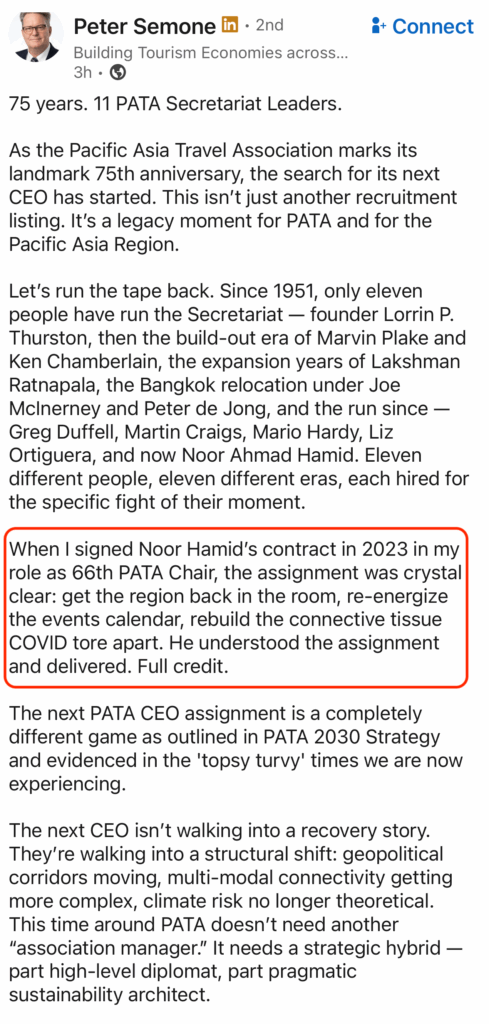
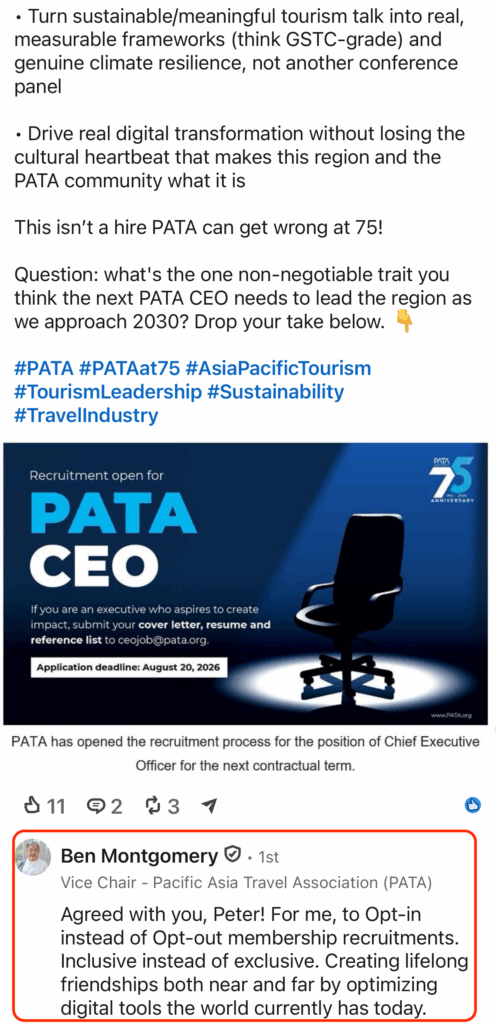
I texted Mr Semone to ask whether he would be applying for the CEO’s job. He sent this image in response ….
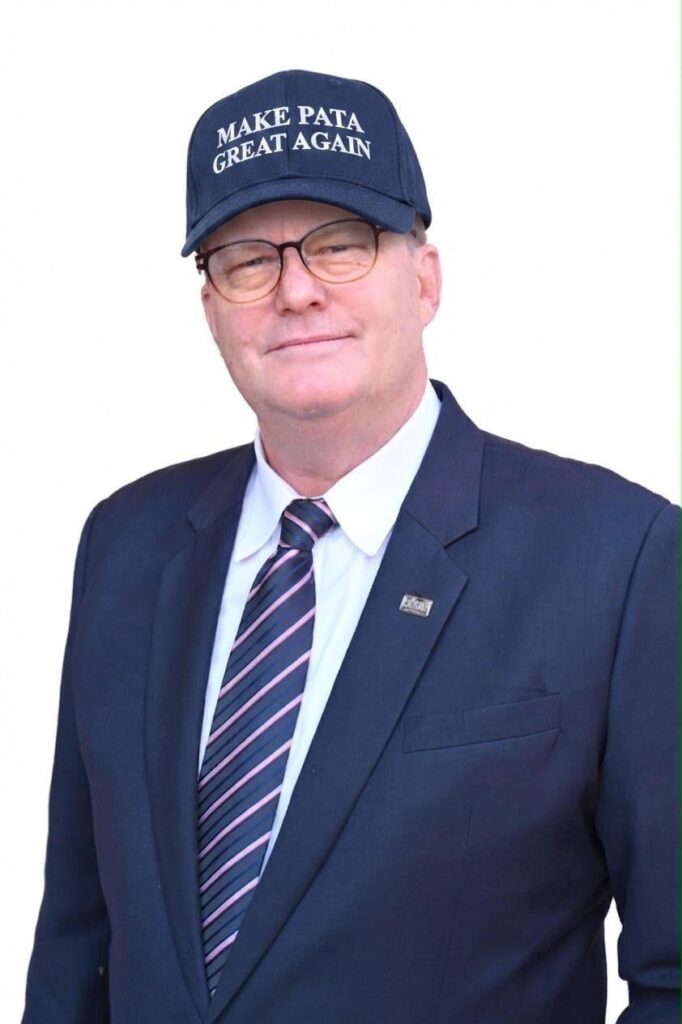
Mr Noor confirmed to me that he has applied for an extension. He noted Mr Semone himself publicly gave him “full credit” for delivering on his mandate but feels there is a lot more work to be done before PATA can regain a firm footing in this era of constant turbulence. He declined further comment.
Several board members have told me privately that they see no reason for a change. They say Mr Noor has managed PATA well, free of any chest-thumping aggrandisement. Appointing a new captain mid-storm and mid-stream would leave Mr Henry Oh and the new board members having to deal with a new CEO. It would also create internal problems with the staff.
Whether PATA opts for continuity or change remains to be seen. The final announcement is due to be made in October.
FORCE 4: GETTING THE DEVELOPMENT MODEL RIGHT
This year, PATA is marking its 75th anniversary. In its formative years, PATA’s focus was on the primary destinations, the commercial and political citadels of the Asia Pacific, such as Hong Kong, Bangkok, Tokyo, etc., where all the gateway airports were emerging. After the boom gained steam, the focus shifted to secondary destinations such as Pattaya, Bali, Penang, Phuket, Cebu and new country destinations such as Vietnam, Cambodia, Laos…
Today, tertiary destinations such as Kuching and Gyeongju-Pohang are emerging. This year, both the PATA annual summit and the PATA Travel Mart were held there. But the difference in the development model could not be more stark.
Historically, both the primary and secondary destinations have failed to get the development model right. Hence, the ongoing debate about “overtourism”, over-capacity, imbalanced supply-demand ratios, manpower and sustainability, amongst others. That opens a window of opportunity for tertiary destinations to learn from the mistakes of the forerunners and get the business model right.
But even that seems to be failing.
Kuching is the capital of a state that takes great pride in its environmental assets. It is marketed as the “Land of the Hornbills”. The collaterals proudly refer to pristine forests with orangutans and medicinal plants. But the urban areas are a different story.
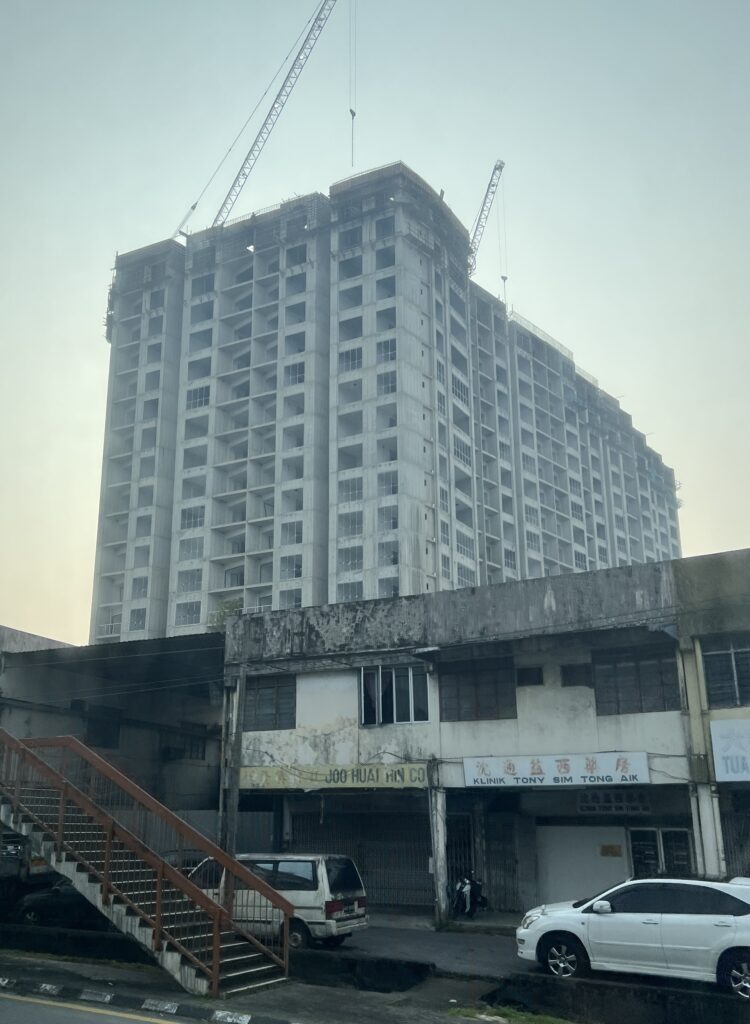
The sprawl has already begun. The head of the Malaysian hotel association chapter told me 70 condominiums are coming up. That will lead to population growth, traffic congestion and the multiple problems which plague uncontrolled development in many Asian cities. That will destroy the character of Kuching. Not exactly a very good welcome for people seeking refuge from the same environment in which they live back home.
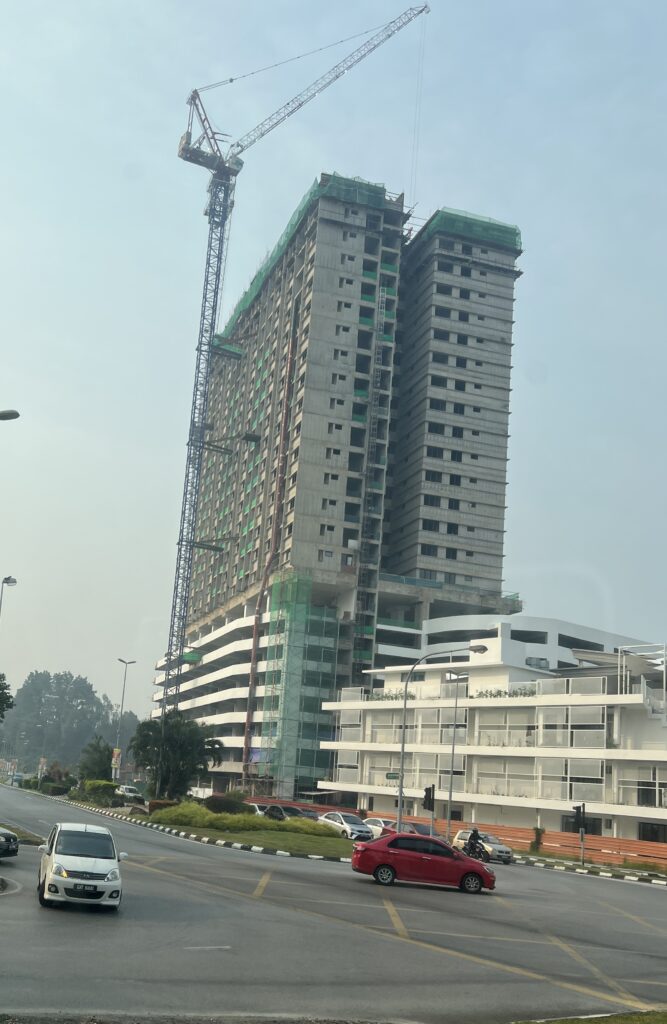
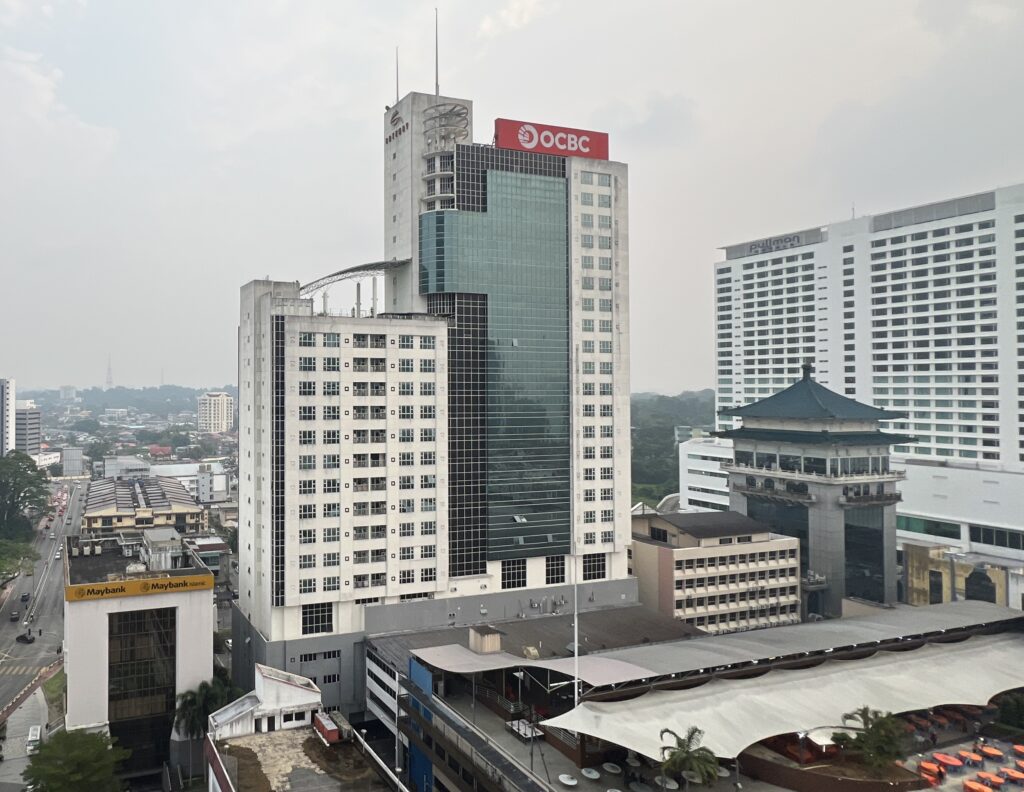
All through the four days of the PTM, the city was blanketed by smog and smoke emitted by the annual burning of plantations. Air quality was at unhealthy levels every day. At the media conference, I asked the Sarawak Tourism Minister about it. He admitted that little could be done. He blamed “our neighbours”, meaning Indonesia. However, one Kuching-based operator of an adventure travel company said most of the plantation companies responsible for the burning were owned by Malaysians and Singaporeans.
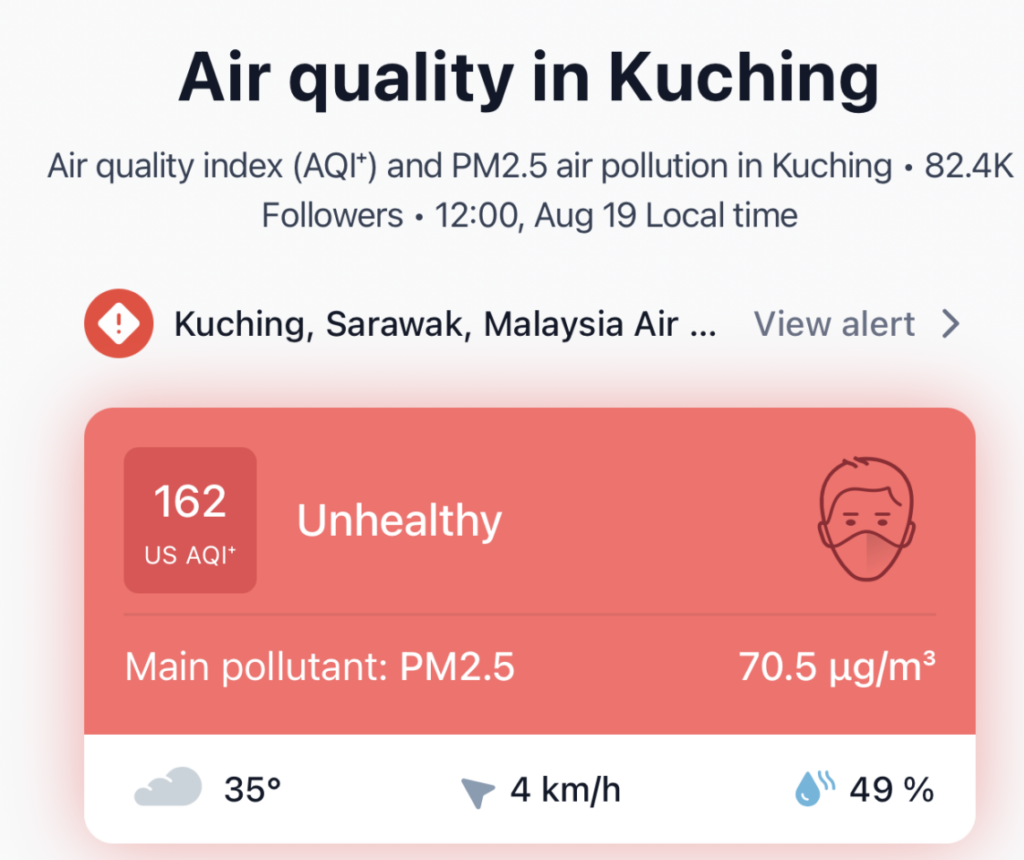
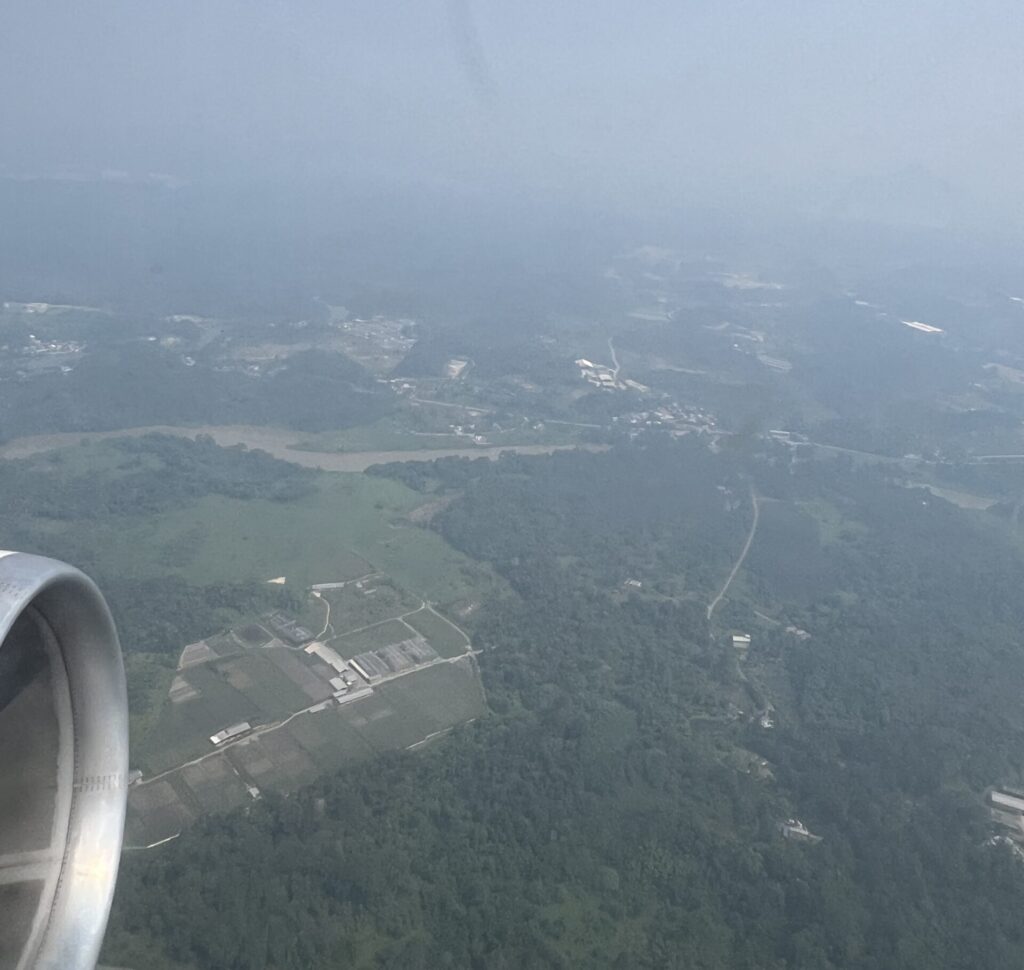
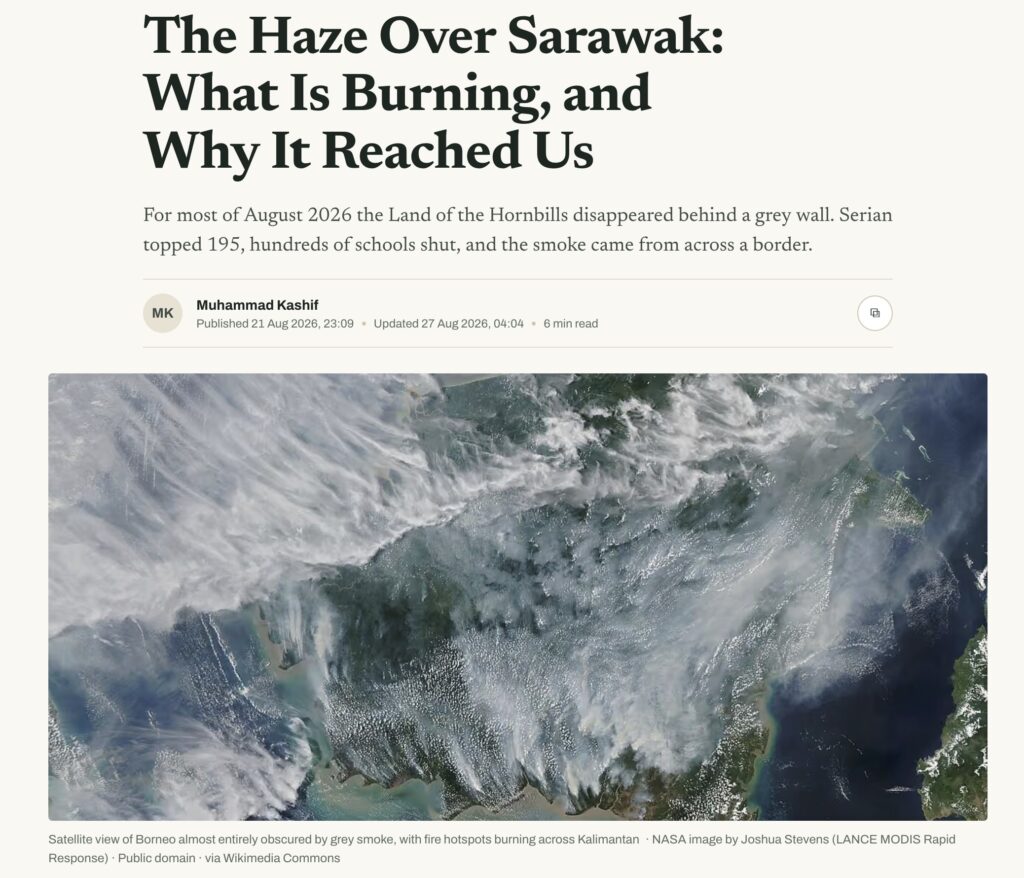
Whatever the cause, buyers would have experienced the unhealthy smog. Many of them were visiting Kuching for the first time, and that was not a good first impression.
CONCLUSION
As a membership grouping, PATA’s survival is dependent entirely on its ability to deliver relevant, timely services to members. It is just emerging from Covid-19 and four years of toxic cronyism. It is now in the era of sustained conflict — geopolitical, economic, environmental, financial, technological. A perfect storm which, as per the theme of its Annual Summit in Korea, will need some careful “Navigating Towards a Resilient Future.”
Right after his election last May, Mr Henry Oh embarked upon such navigation by starting to personally visit the chapters and listen to their concerns and hopes. He is delivering on that. He now faces his second challenge – finalising the CEO process. Putting the wrong man in the job will be as hazardous to Mr Oh’s chairmanship as the smog over Sarawak — and he knows it.
In his LinkedIn post, Mr Semone said PATA is facing a structural shift: “geopolitical corridors moving, multi-modal connectivity getting more complex, climate risk no longer theoretical.” All true. He claims, “PATA doesn’t need another “association manager.” It needs a strategic hybrid — part high-level diplomat, part pragmatic sustainability architect.”
That’s where he is wrong. PATA’s decision-making table is now well stacked with people who already have the answers. It needs leaders who can harness that collective knowledge and convert it into positive solutions.
It does not need a Donald Trump clone.