
20 Jul 2026
Thailand now featured in flagship OECD tourism report, sorry state on full display
Bangkok — For the first time, Thailand is included as a Partner Country in the OECD’s flagship biennial report on Tourism Trends & Policies 2026, released on 01 July. That now makes it possible to do a one-stop comparative analysis of Thailand’s tourism products, policies and strategies against those of the 38 OECD members countries and 15 partner countries, saving the Thai tourism policy- and decision-makers as well as the Thai taxpayer huge amounts of time, effort and money in charting the way forward.
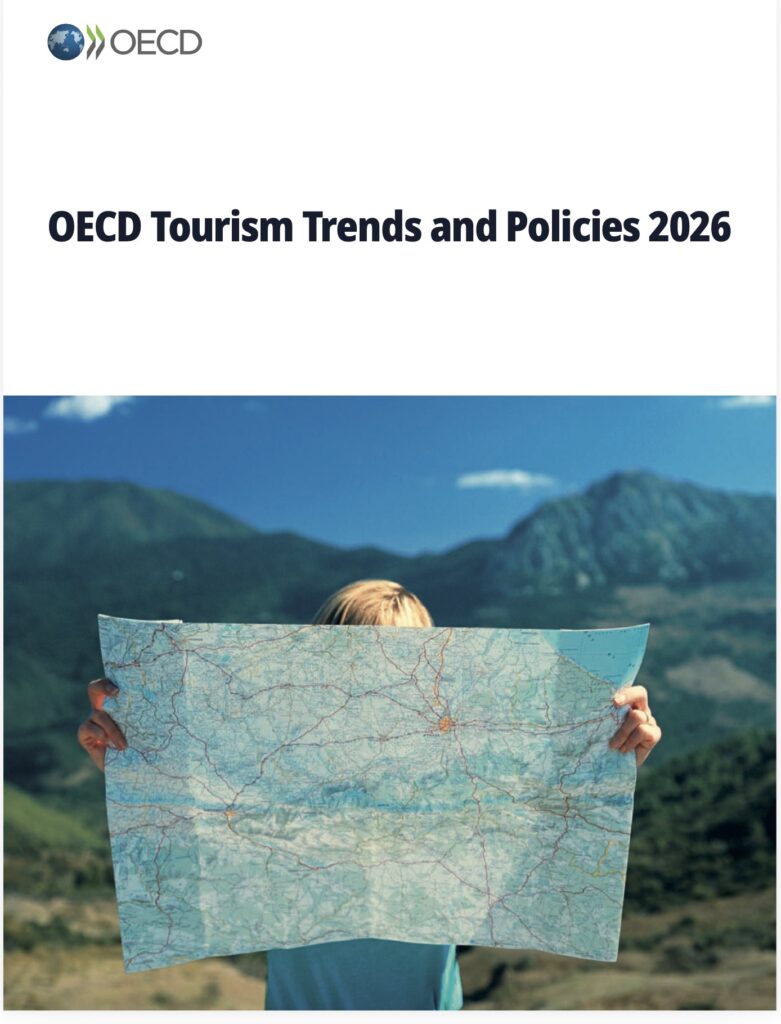
The Thailand section is based on 2024-2025 data. Although much of the information has been overtaken by events, a dipstick analysis of the statistics alone shows the kingdom was one of the five worst performing countries in the post-Covid period. A country that was the leading tourism destination in the 1980s and 1990s has fallen seriously behind, lost its competitive advantage and become just another product on the shelf of a huge global supermarket.
With massive competition now emerging on the global stage, climbing up the rankings again will be a tall order.
Thailand is included in the OECD tourism report because it has applied for membership in the Paris-based global grouping, and hopes to be approved by 2028. That year will also mark the start of the next 2028-2032 five-year national development plan. Major internal and structural changes are under way across both the public and private sectors to qualify Thailand for OECD membership. Travel & Tourism is one of the economic sectors undergoing reform, as indicated by one key step: The revamping of visitor accessibility policies and the crackdown on nominee companies to enforce “rule of law” and enhance safety and security for visitors and local residents.
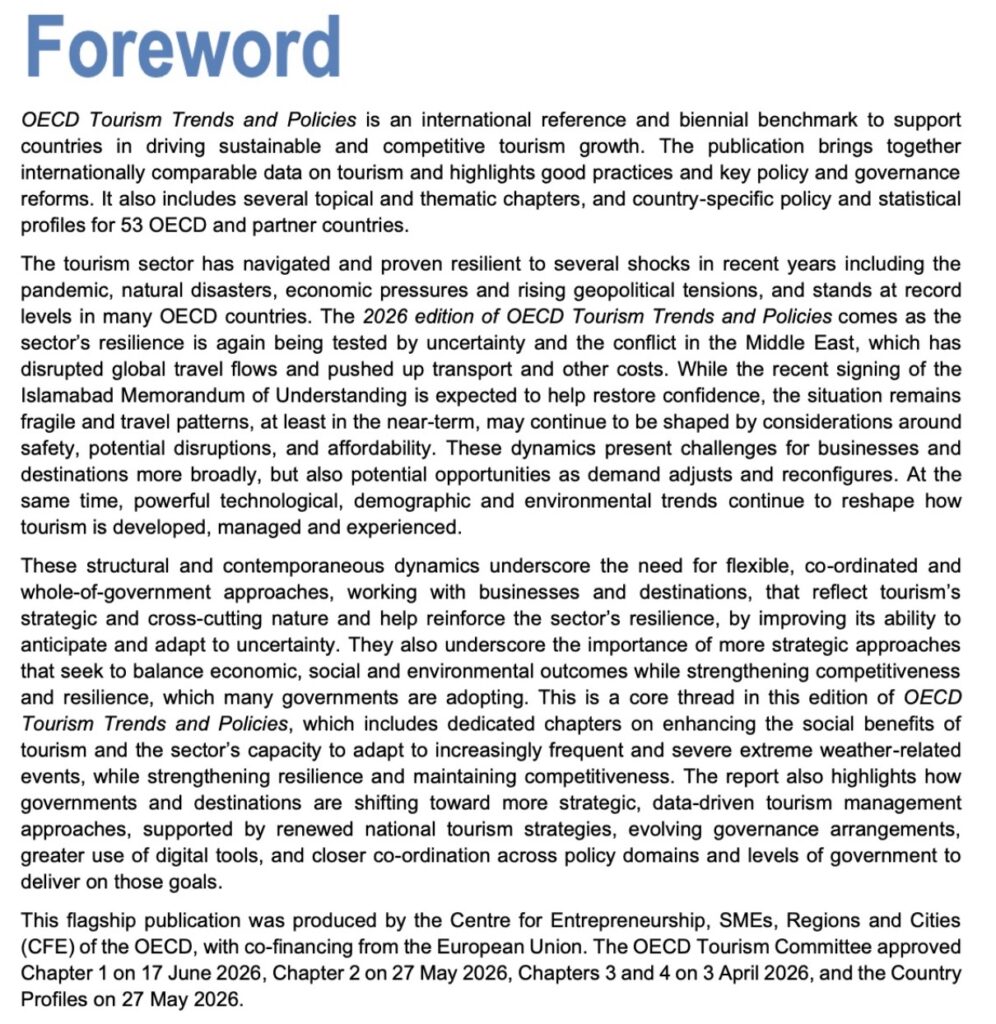
The following image of the Introduction explains the purpose and context of the OECD tourism report:
For Thailand, three key themes stand out.
1) The poor performance of Thai tourism post-Covid. This image below clearly shows the shocking state of play.
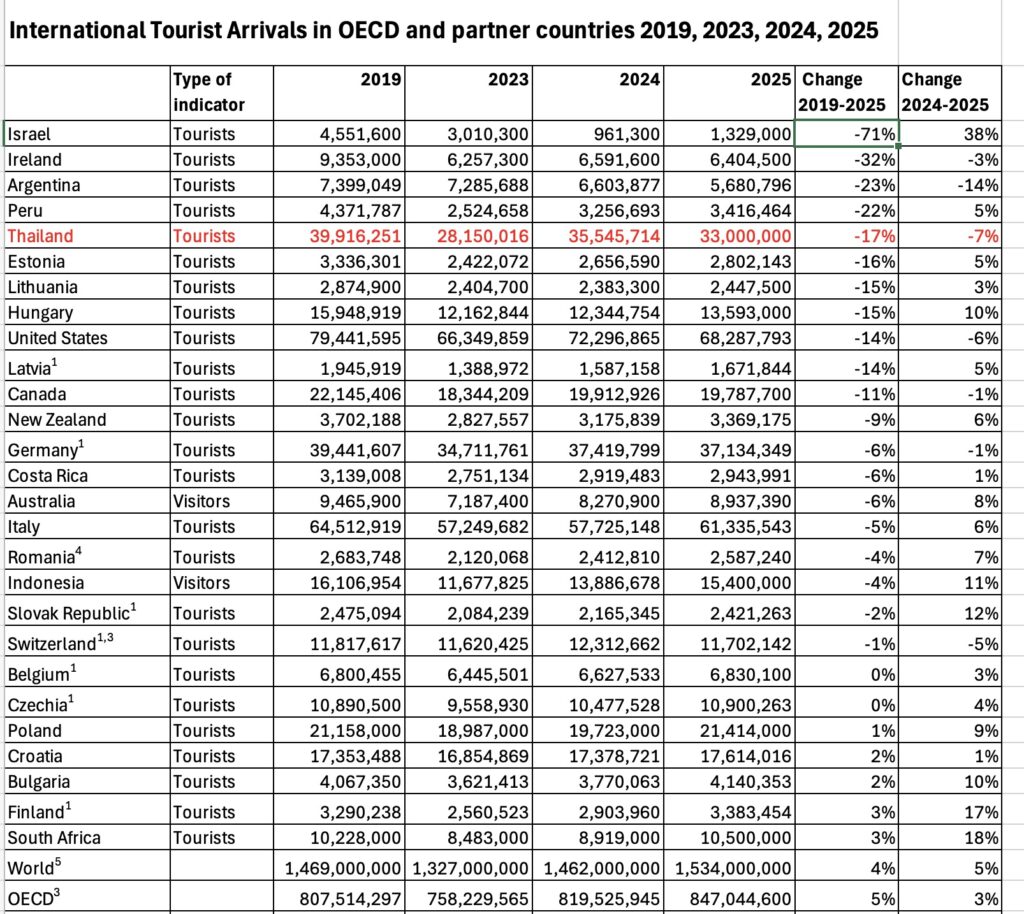 Tourists: International tourist arrivals (excluding same-day visitors). Visitors: International visitor arrivals (including same-day visitors). 5. UN Tourism Data (World Tourism Barometer, Statistical Annex, May 2026) Source: OECD Tourism Statistics (Database)
2) The lack of any “wow-factor” in the Thai tourism response strategies. The image below shows a snapshot of the policy priorities and actions. When compared against similar snapshots of the other 52 countries included in the report, the Thai responses could be best described as standard textbook fare.
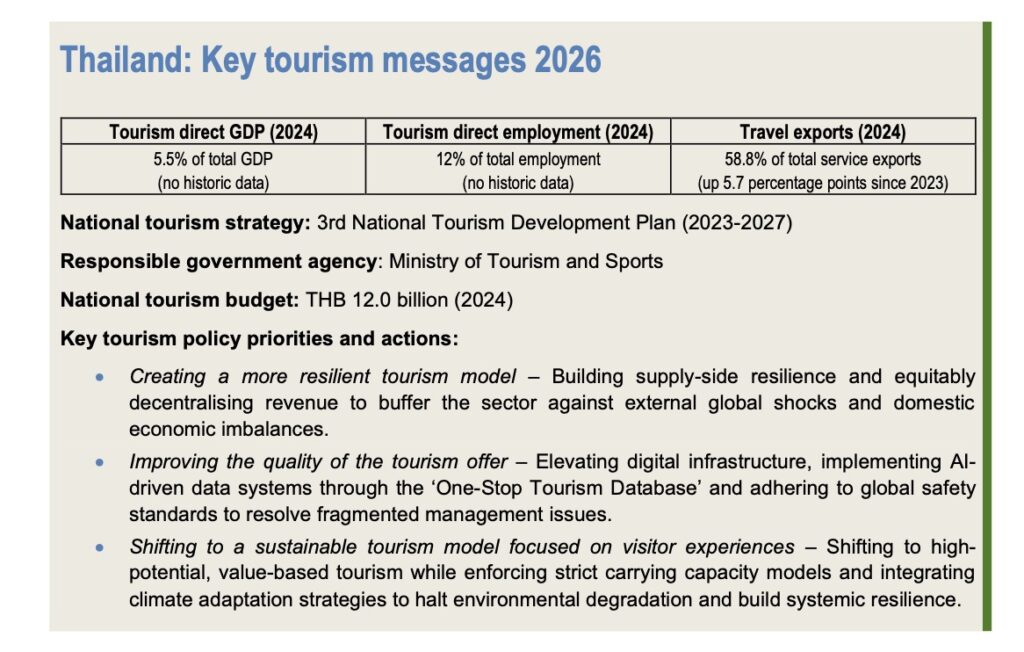
3) The impact of the “Travel Balance.” This interesting aspect of the OECD report charts the net income of tourism by tabulating the earnings from inbound vis a vis outbound visitors. The source of these figures is unclear. As a benchmark, the Thai “Travel Balance” is quite high, mainly because of the huge gap in Thailand’s inbound-outbound tourism. If the real “leakage” factor is measured by including the outflow of funds to pay for OTA commissions, management, franchising, intellectual property, repayment of foreign loans, imports of goods and services, etc, the real net earnings from tourism would be substantially different, not just for Thailand but all countries.
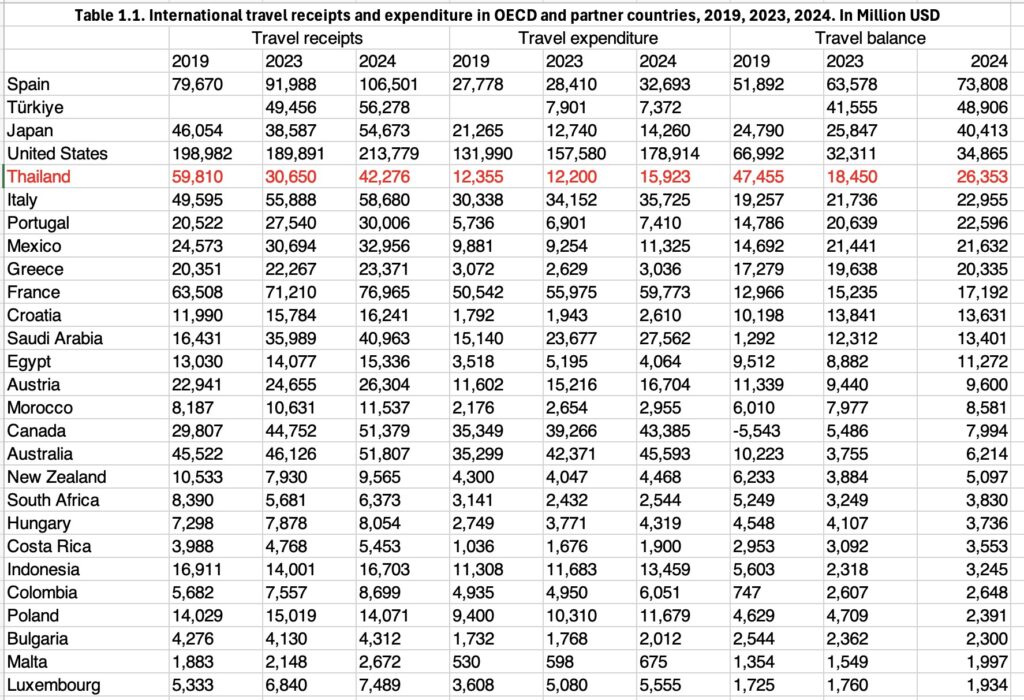 1. UN Tourism Data (World Tourism Barometer, Statistical Annex, May 2026) Source: OECD Tourism Statistics (Database), (IMF, 2026).