
14 Jul 2026
UN proclaims 2027-2036 as “Decade of Peace for Future Generations”, US casts sole vote against
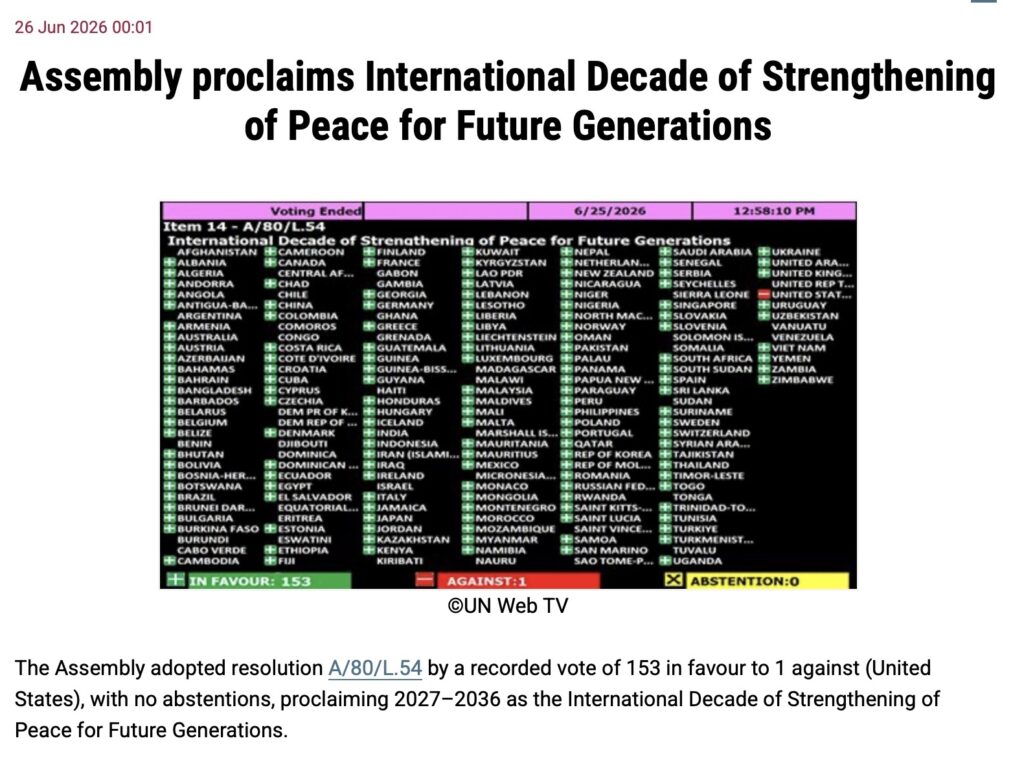
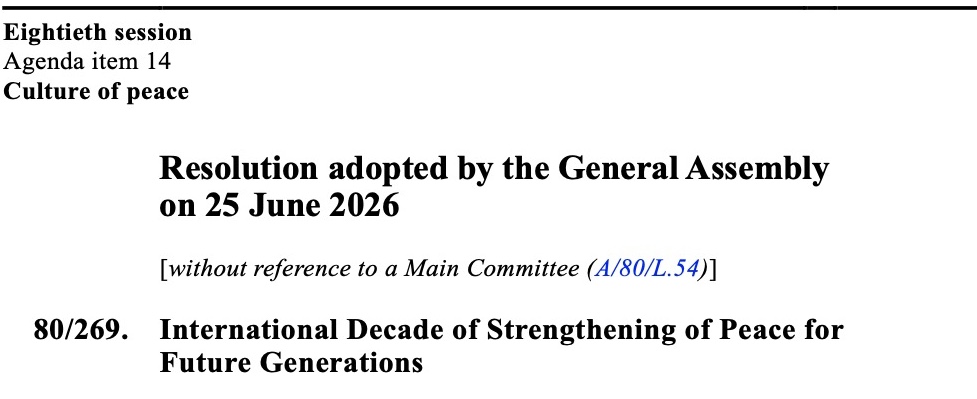
Bangkok — The United Nations General Assembly has proclaimed the period 2027–2036 as the International Decade of Strengthening of Peace for Future Generations. In a move that should shock and shame every American citizen, the United States was the ONLY country to vote against the resolution which was passed on 25 June with a vote of 153 with no abstentions.
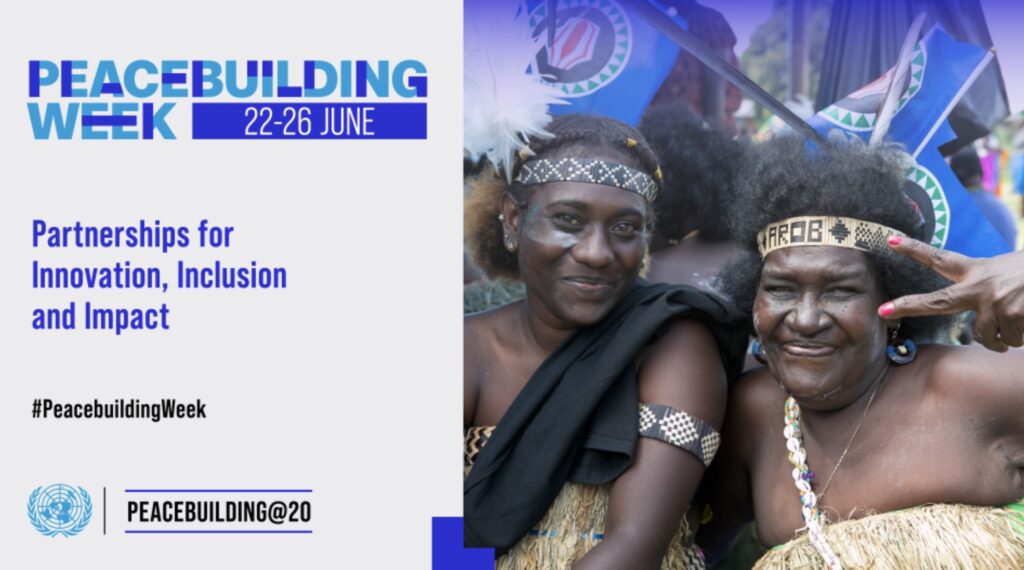
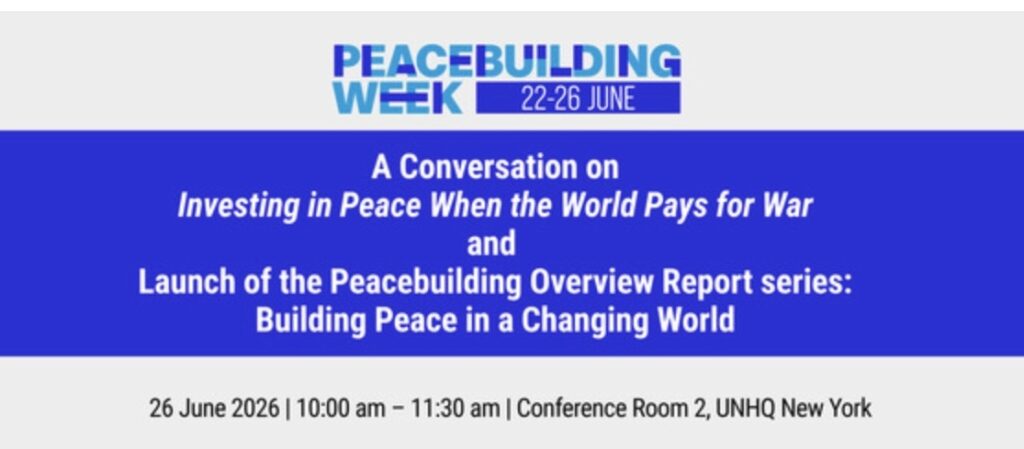
This General Assembly session was held during the UN’s first-ever Peacebuilding Week (22-26 June) to review the 2025 work of the Peacebuilding Commission and the Peacebuilding Fund, amid warnings that rising conflicts and shrinking humanitarian budgets are straining global peace efforts. Assembly President Annalena Baerbock said active armed conflicts hit a record high in 2025 while humanitarian funding fell 40 per cent between 2024 and 2025.
Said the concept note for Peacebuilding Week, “Peacebuilding stands at a crossroads. Increasing conflicts, geopolitical divides, protracted crises, a global governance backsliding, mounting financial pressures, and growing strain on multilateralism and international solidarity are reshaping the conditions under which peace is built and sustained across the globe.
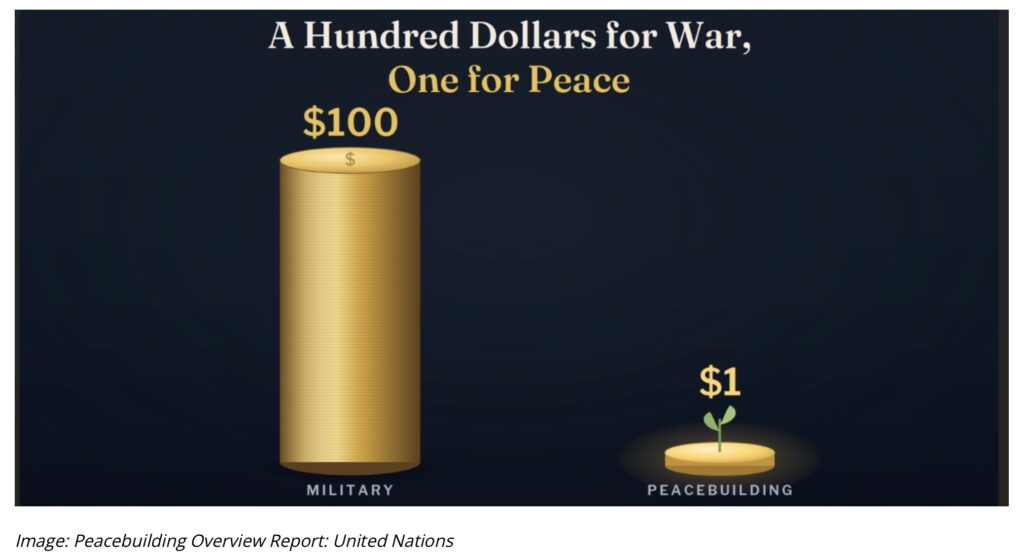
“For the past two decades, the world has invested a mere one dollar on peace for every 100 dollars of military expenditure. This underinvestment in addressing the root causes of violence underscores both a structural challenge, which can accentuate risks, and a strategic opportunity to better align global efforts with peace objectives.”
One key event of the Peacebuilding week was the launch of a report, “Investing in Peace When the World Pays for War.” Drawing on contributions from governments, civil society, academia, and the UN system, the report argued that the case for peacebuilding must be made with greater clarity and urgency than ever before. It identified a critical structural gap: peacebuilding lacks the shared data practices and evidence frameworks to demonstrate its value to policymakers, donors and the broader public.
As the global Travel & Tourism industry has now adopted a new buzzword, “Value over Volume,” the report opens a clear window of opportunity to raise the definition of “value” to a higher level, beyond mere visitor spending to the much higher cause of Peacebuilding, and establish mechanisms to measure the “Value of Peace.”
The “Decade of Peace” resolution was introduced by Tajikistan President Emomali Rahmon. The Tajikistan Foreign Ministry said in a statement that it “comes at a moment when millions of civilians in various regions of the world continue to face security threats and armed conflict. This development reflects the peacebuilding and unifying role of the Tajik nation and will further contribute to advancing the global agenda on the culture of peace.”
It said this initiative has been advanced by the leader of a nation which, “having endured the horrors of an imposed civil war, deeply cherishes peace and tranquility, political stability, and national unity, and will never forget the bitter lessons of that national tragedy—is both timely and indispensable.”
It specifically hailed Kyrgyzstan, Tajikistan and Uzbekistan for resolving border disputes through peaceful means.
The resolution acknowledged that investing in building a strong foundation for lasting international peace and security, sustainable development, human rights and fundamental freedoms and the rule of law “is the most effective way to safeguard the needs and interests of future generations.”
It called on UN member states to incorporate the promotion of peace, dialogue and reconciliation in all policy and decision-making processes, especially those relating to children, youth and older persons.
The resolution hailed Member States, leaders and peoples who have promoted peace, reconciliation, dialogue and national unity through inclusive political processes, confidence-building, post-conflict recovery and long-term investments in social cohesion. They all “constitute valuable sources of inspiration and learning for present and future generations.”
It urged the entire United Nations system to facilitate the implementation of the Decade in cooperation with Governments and other relevant stakeholders, including through public awareness-raising activities.
Speakers at the General Assembly session argued that prevention and peacebuilding are far cheaper and more effective than responding to conflict after it erupts. Many warned that declining voluntary contributions threaten the UN’s ability to sustain national peacebuilding efforts at a time of growing global instability.
In her statement, Annalena Baerbock of Germany said, “Peace does not occur automatically. It is built through persistent diplomacy, collective action and political will.” Eight decades after the UN’s founding, she warned, “we should be alarmed at our trajectory”.
Citing cynicism about the UN’s ability to end the devastating conflicts that capture news headlines, she stressed: “Wars that never happen because of peacebuilding, conflict-prevention or sustainable-development efforts rarely make headlines.” Success stories — such as the peaceful resolution of transboundary water disputes in Central Asia and women’s political participation in post-conflict Liberia — merit more attention.
“Yet, like everything else, peacebuilding is only possible when properly resourced,” she cautioned. Since 2006, the Peacebuilding Fund has supported 75 countries and territories with more than $2 billion, sustained by the voluntary generosity of more than 60 Member States. National ownership in peacebuilding must continue to exist side by side with critical external support, she said.
Norway’s delegate, also speaking for Denmark, Finland, Iceland and Sweden, agreed that prevention has a greater return on investment than grappling with conflicts. He also joined others in praising the quiet, often unrecognized success stories of peacebuilding, which do not make news headlines the way wars and tragedies do. “It is very hard to communicate that conflicts have been prevented,” he said.
“Today, amid rising conflict and compounding global risks, we must use [the UN’s peacebuilding] architecture more strategically, more consistently and with more ambition,” said Australia’s representative, also speaking for Canada and New Zealand. The Peacebuilding Commission is uniquely placed to provide “sustained political accompaniment” to national peacebuilding efforts and to keep international attention focused on at-risk situations, he said.
Nepal’s delegate said that, based on his country’s experience, “peace is not only about preventing the recurrence of conflict — but also about building resilient societies by investing in people, in trust and in the institutions that bind communities together”. Peacebuilding must be nationally led, prevention-oriented and people-centred, he stressed, adding that broad participation lends legitimacy to political processes.
“Peace is never a linear process, but rather a long-term task,” agreed Colombia’s representative, citing her country’s own experience. She echoed other speakers in pointing out that military expenditures around the globe are expanding rapidly, even as funding for humanitarian aid and sustainable development has collapsed.
Discussions during the Peacebuilding week brought together a diverse group of practitioners and policy makers, academia and civil society leaders for a conversation on (a) how today’s geopolitical and financial pressures are impacting efforts to build peace, (b) what is required to secure renewed political and financial commitment at this critical juncture, and (c) how governments, civil society, international organizations and the private sector can better measure, demonstrate and enhance the impact of peacebuilding.