
24 Aug 2025
Life After 75 — A Blueprint for a New PATA
Bangkok – In 1998, the Pacific Asia Travel Association made a historic decision to move its heaquarters from San Francisco to Bangkok. The decision was widely applauded. But one young member didn’t like the idea. His name was Peter Semone and this is what he said.
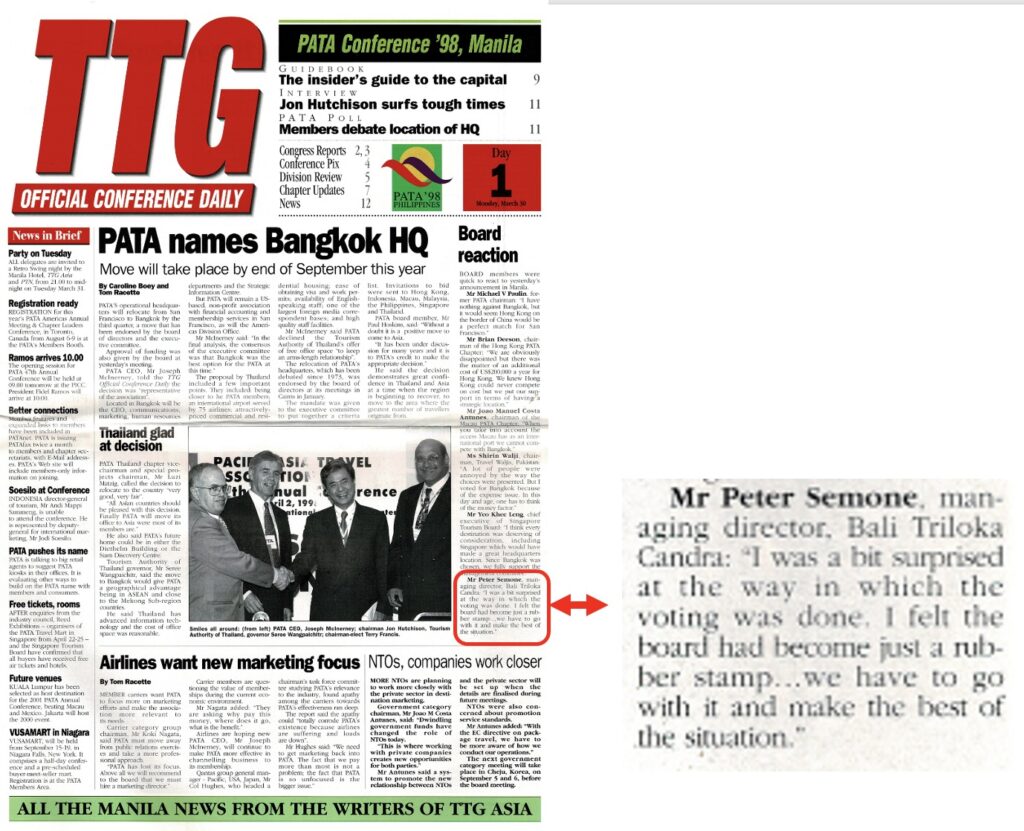
“Rubber-stamp” means approving something without proper discussion. In fact, the young Mr Semone’s comment was incorrect — the decision to move was preceded by years of intense debate. Today, Mr Semone is chairman of PATA which HAS in fact become a rubber-stamp organisation. Set to mark its 75th anniversary in 2026, it is a far cry from the high-flying organisation it was when it moved to Bangkok. Beset by multiple man-made external shocks and acts of a clearly angry God in the post-Covid era, it is struggling to survive and prove its relevance in the new era of conflict and chaos.
Survive it must. Because if a PATA did not exist, it would have to be invented. However, the current structure, content and agenda are clearly not in sync with the new realities. It will need what Tourism Authority of Thailand Governor Mrs Thapanee Kiatphaibool calls “a reality check,” a new blueprint, a new agenda and a new raison d’etre. The new mantra, “Meaningful Tourism”, is simply not going to cut it.
This week, PATA members attending the annual Travel Mart in Bangkok beginning Aug 25 will hear many rah-rah speeches and declarations. In the following analysis, I am proposing an alternative blueprint to help members rethink the future of PATA, the role and responsibility of its leaders and office-bearers and the value of membership dues.
First, a history lesson.
In 1998, PATA was the preeminent Travel & Tourism industry association of the Asia-Pacific.
It had nearly 20,000 members across 40 countries.
The PATA Travel Mart was the leading travel trade show.
The annual conference was opened by former presidents and prime ministers.
PATA’s Research and Intelligence Centre was an unmatched crucible of knowledge.
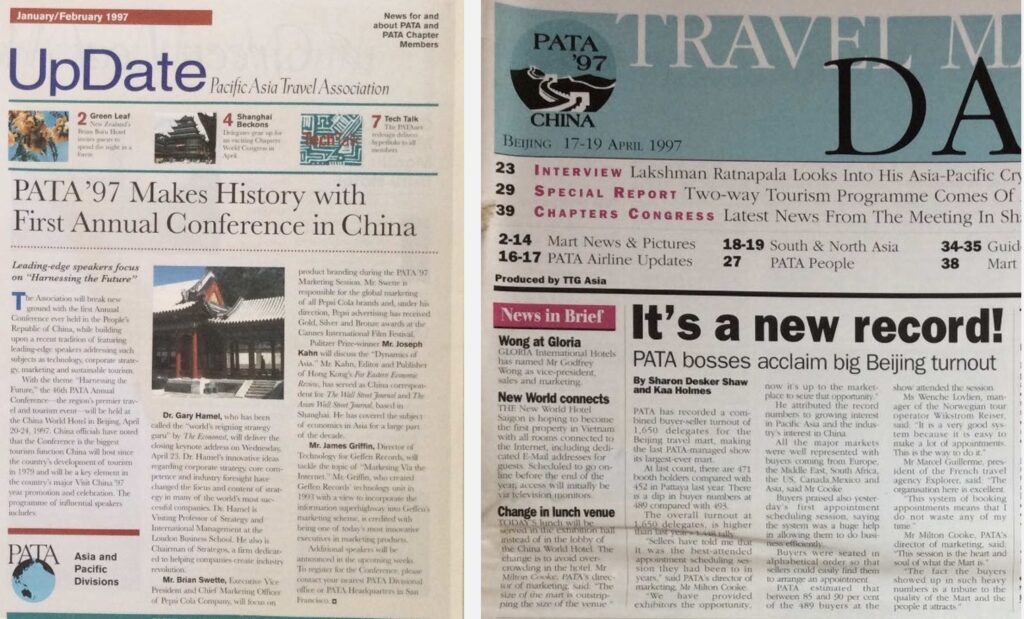
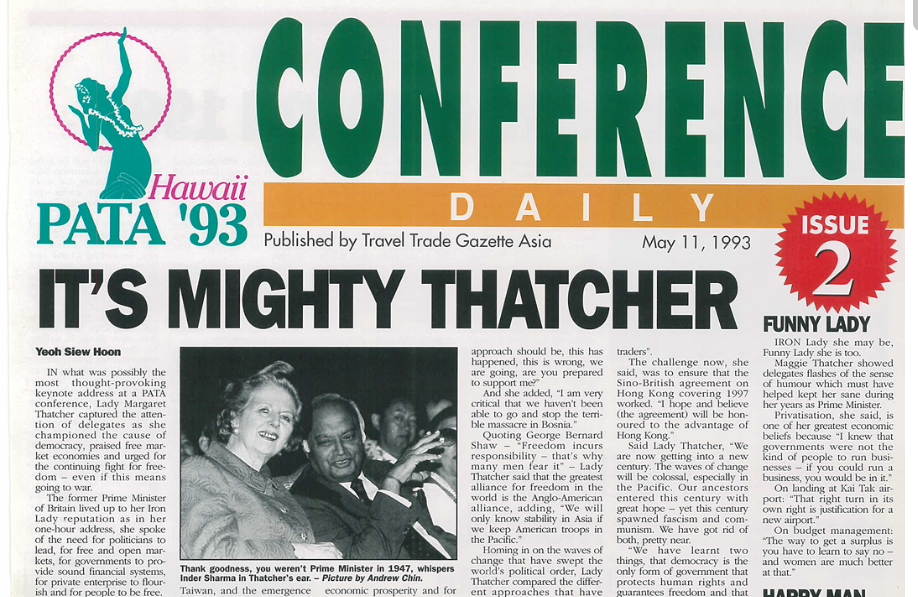
Which begs the question: Why did an organisation which moved to Asia to take advantage of the promise of the Asian Century fail to deliver? Why did an organisation that claims to be the Voice of Asia Pacific tourism lose that Voice?
Of the many reasons, three stand out:
1) PATA Failed To Grasp The Impact Of The Forces Of Change Sweeping Through Asia.
Today, geopolitical and geoeconomic turmoil is widely agreed to be posing the most serious threat to Travel & Tourism. In fact, it’s not new. In 1997, a year before PATA’s move to Bangkok, Asia was hit by a financial crash, the worst geoeconomic catastrophe of that era. Thailand was at the epicentre of that. Barely had that been dealt with, that 9/11 struck, followed by a string of upheavals, such as the wars in Afghanistan and Iraq, the Bali bombing, the US subprime housing market crash and, closer to home, the devastating December 2004 tsunami and the 2006 military coup in Thailand.
All those disruptions impacted Travel & Tourism. But the response always fell short. All efforts were directed at simply mounting “recovery” campaigns. The short-term measures merely treated the symptoms, never the causes. The lessons were never learnt, which is why PATA is ill-prepared for the current round of disruptions. As the then editor of PATA’s Research & Intelligence publication Issues & Trends, I tracked them carefully.
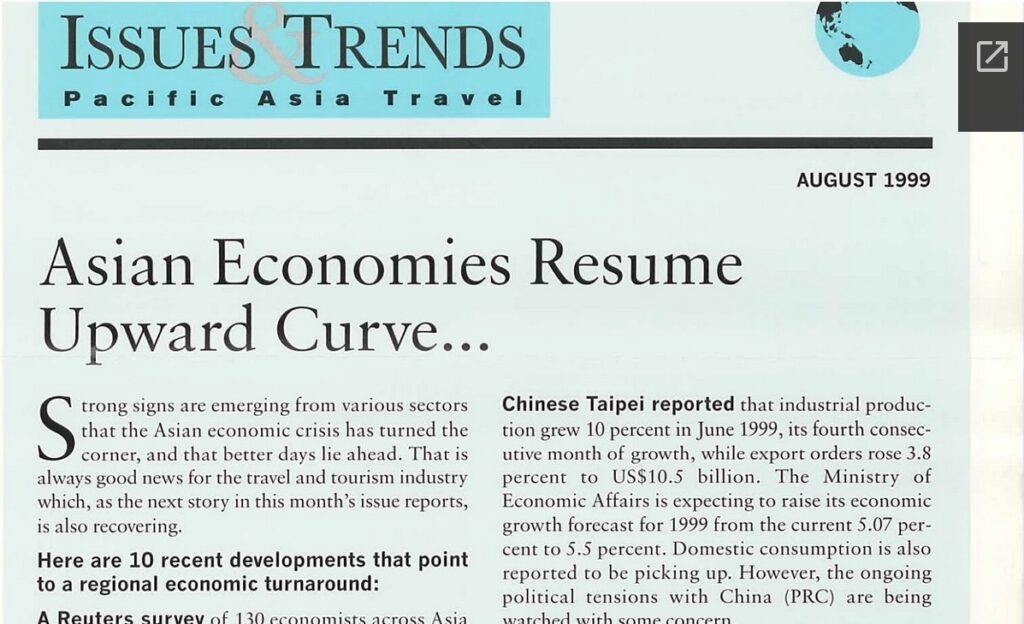
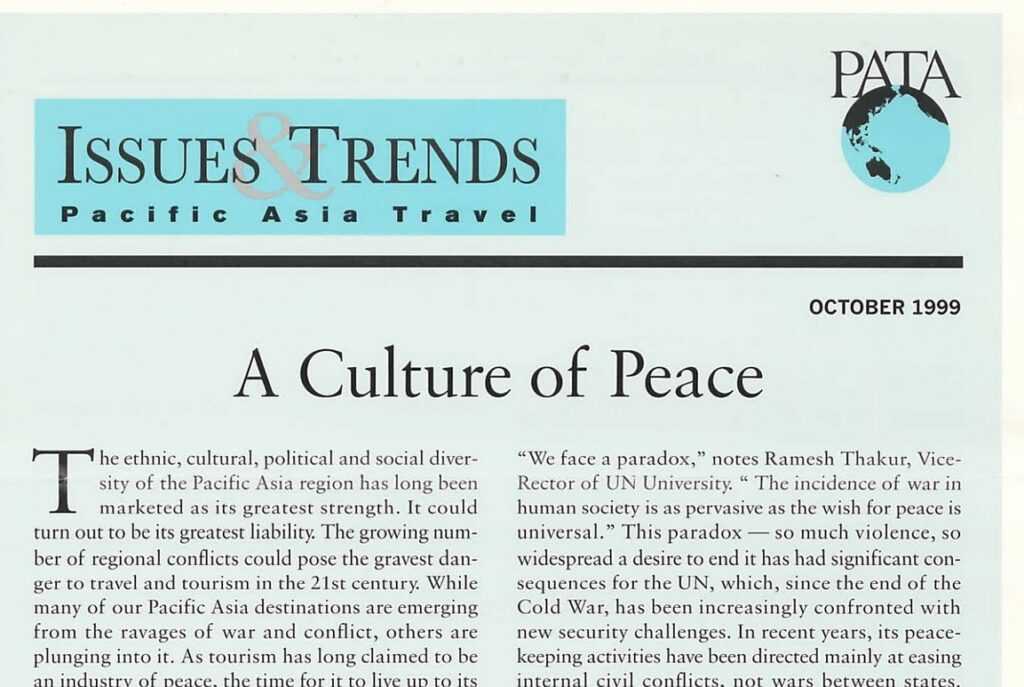

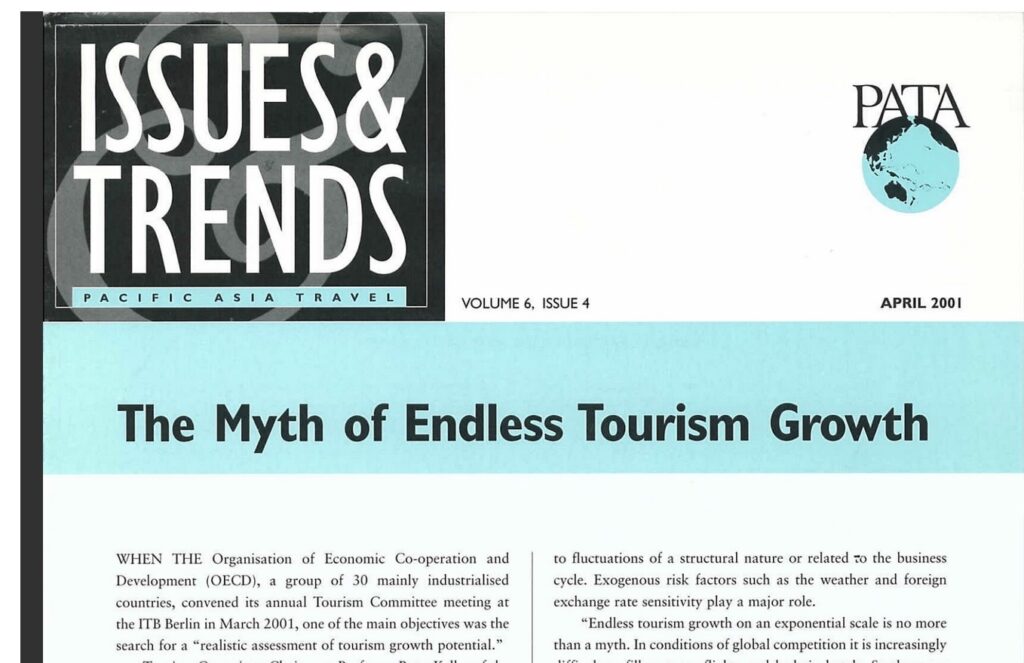

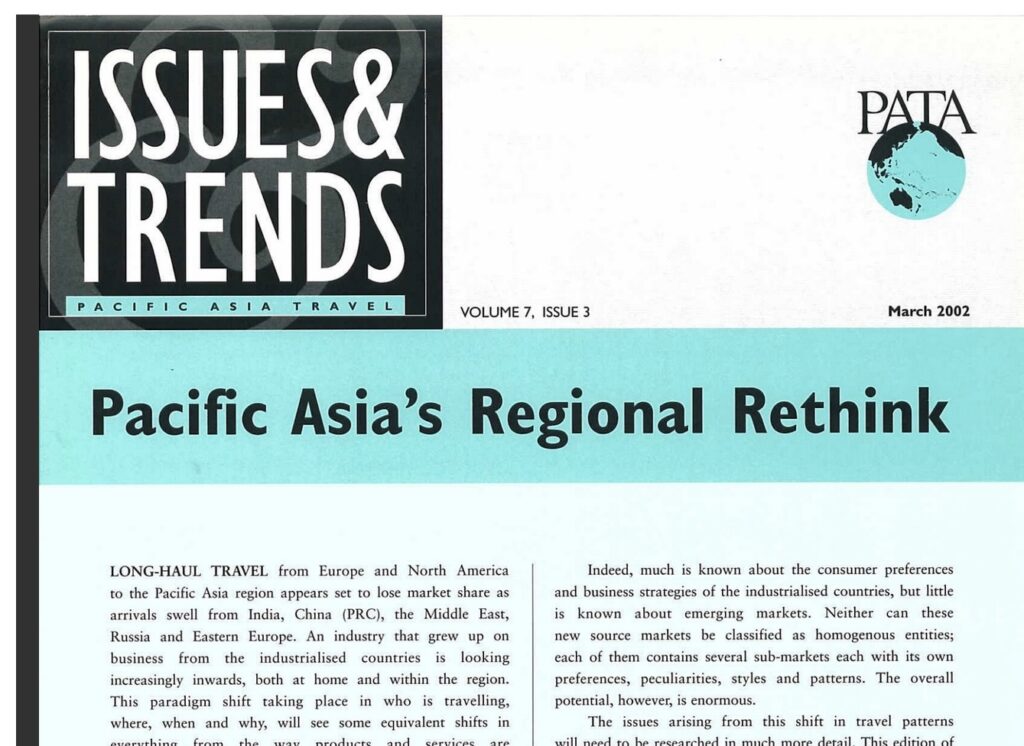
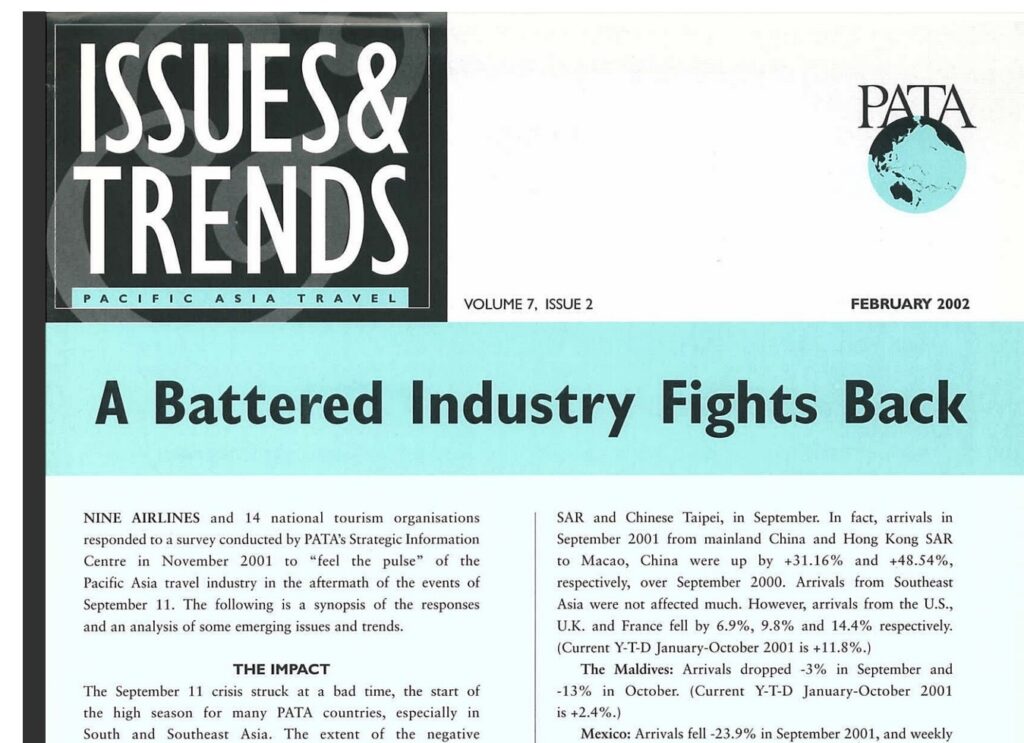


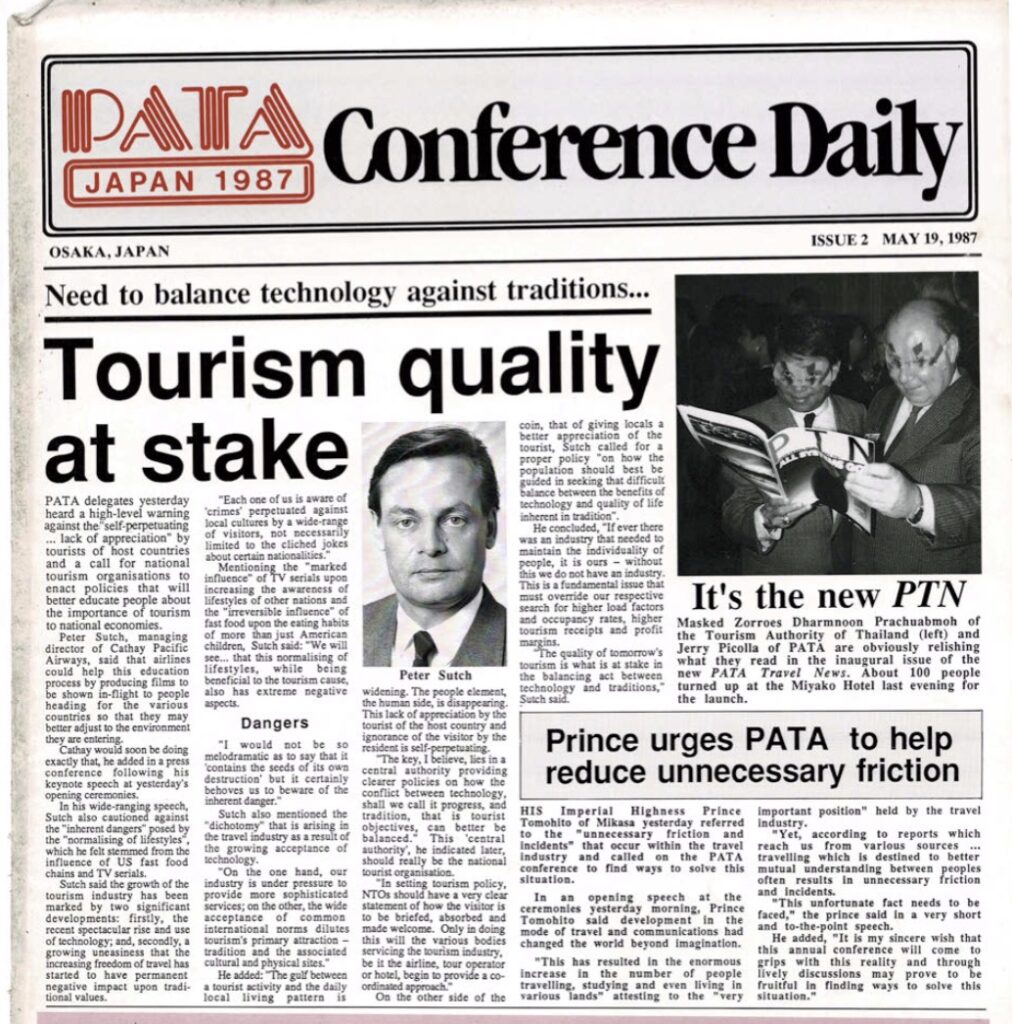
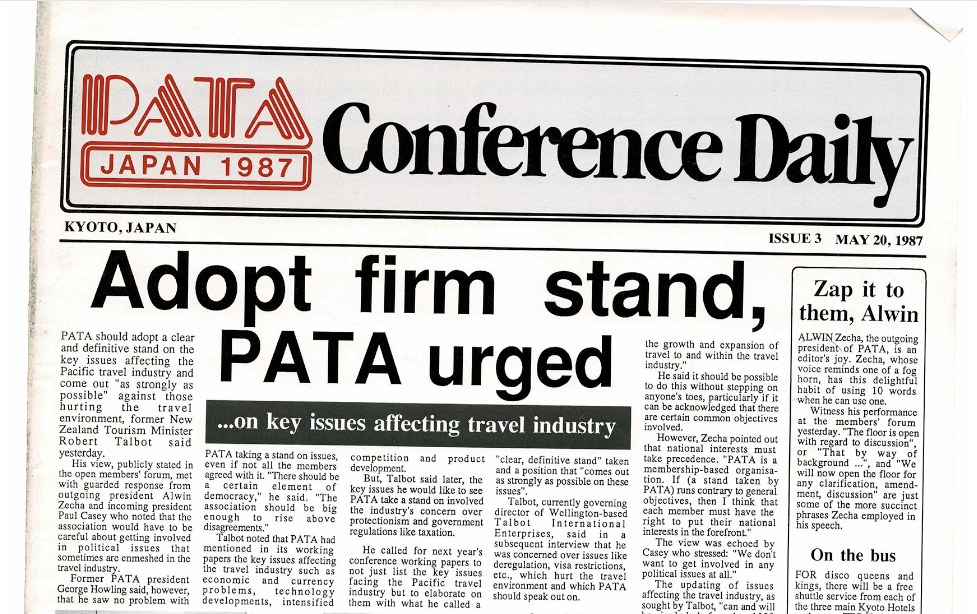
PATA decision-makers didn’t pay much attention. Mostly, they stuck to the traditional comfort-zone topic of “sustainability.” Even that fell short. A major conference called “CEO Challenge” to deliver “solutions” to the climate change crisis failed to deliver (click on the image below to read the story).

Today, PATA’s own research body, the HK Polytechnic University, has identified geopolitical turbulence as the biggest challenge facing Travel & Tourism. In spite of that, PTM delegates this week will notice that not a single session at the Knowledge Forum nor the Youth Forum is devoted to this topic.
2) The PATA Travel Mart Lost its Shine
The annual PTM was once the Asia-Pacific’s signature travel trade show. In October 2008, Messe Berlin, organiser of the global trade show ITB Berlin, launched a competing event based in Singapore. With a faster corporate decision-making structure, the networking power of the ITB group, the fixed location in a single venue and the backing of Singapore Inc., ITB Asia attracted interest and grew rapidly. In just three years, it eclipsed the PATA Travel Mart. Numerous other local, regional and subregional markets also came up, further intensifying the competition and forcing cash- and time-strapped buyers and sellers to make a choice. The PTM has never regained its top slot. This week’s PTM claims to have delegates from 500 organisations. ITB Asia this October claims to have 2,400 buyers and sellers.

3) Abandoning the Vibrant 4D Philosophy
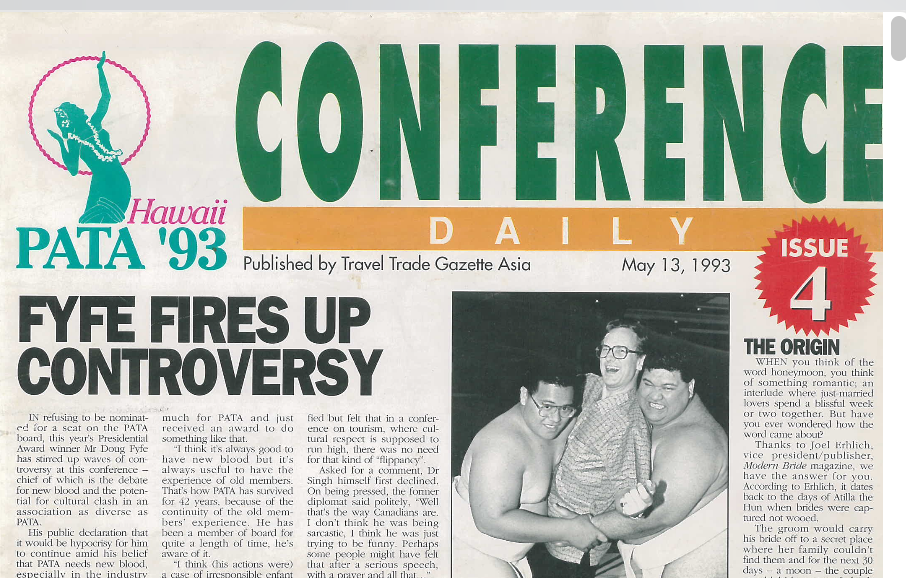
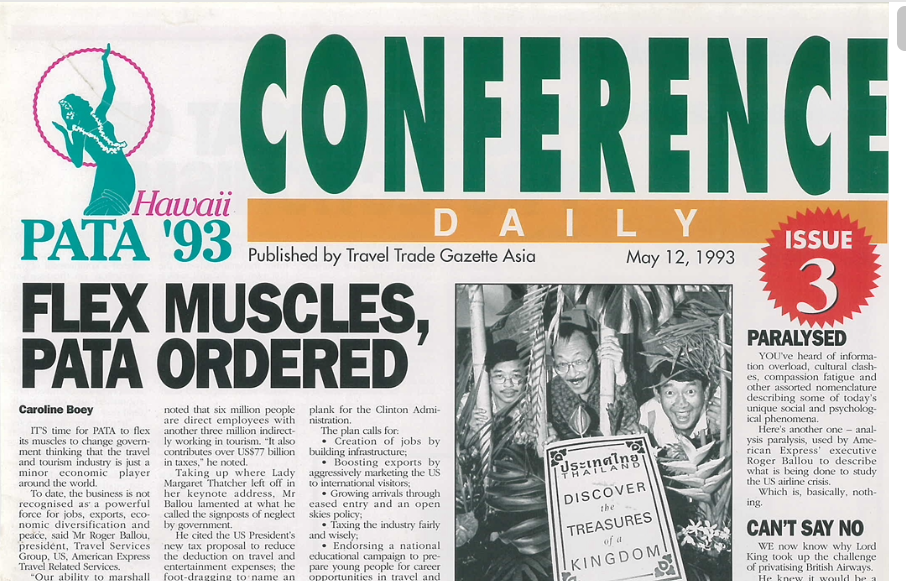
Perhaps the most important reason for PATA’s decline was its drift away from Democratic Dialogue, Debate and Dissent (the 4D Philosophy). In the 1980s and 1990s, PATA membership comprised a diverse representation of industry stakeholders — airlines, hotels, tour operators, NTOs, convention centres and many more. PATA events allowed them to meet and network as equals. Everyone had a voice, and a channel of expression. PATA Forums were alive with vigorous, vibrant debate. Press conferences were attended by dozens of real journalists challenging the PATA management and office-bearers about every aspect of their performance. That adrenaline-pumping buzz which infused PATA events, is long gone.
Over the years, Garbage In led to Garbage Out. As bad decisions hit membership numbers and participation in PATA events, its management and board members blamed everyone but themselves. Sweeping issues under the carpet became the name of the game. “Hail to the Chief” became the PATA anthem. In a world awash with forums and events, the Annual Conference and the PATA Travel Mart will never regain their former glory. The other unique selling proposition, Research and Intelligence, is struggling to make an impact in a region bursting with statistical analysis and trends.

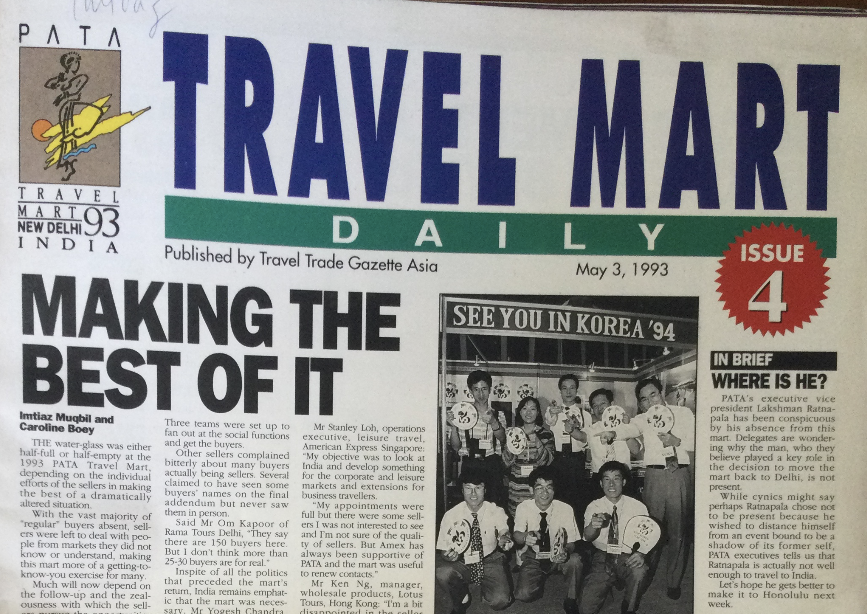
Against that background, what does the future hold, especially at 75?
A hard and honest look back at PATA’s own history will be a good start. The TAT Governor’s reference to a reality check is no different from a medical check. If problems show up, the patient needs to be treated, even if it means painful surgery. The latest fix-it solution is “Meaningful Tourism.” A close study shows it will do little to mitigate the impact of external geopolitical and geoeconomic shocks. Tinkering under the hood is of no use if the road is pockmarked with potholes and the traffic lights are malfunctioning.
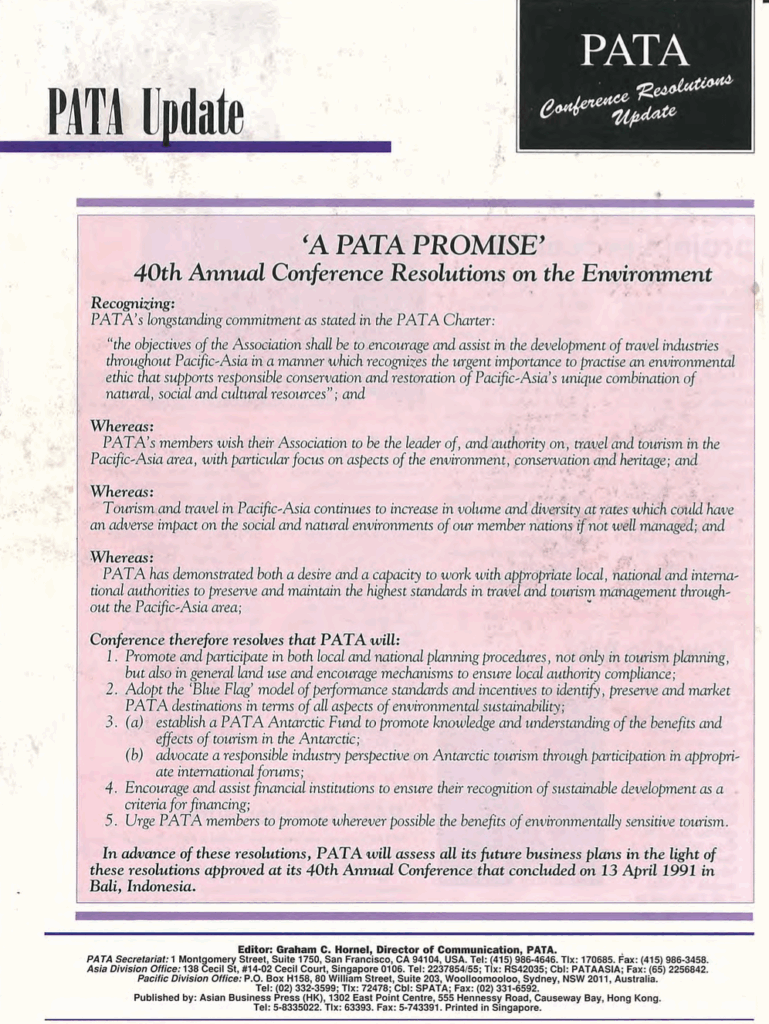
In fact, the “Meaningful Tourism” gameplan pales in comparison to the visionary, far-sighted PATA Promise published after a spectacularly successful summit in Bali in 1991. The PATA Promise was the first statement of its kind issued by any travel industry organisation of that era. And yet, here we are today, still recycling and repackaging the same message in different guise.
Next, breaking out of the rubber-stamp mentality. PATA’s conversion from a multi-voice, multi-sectoral body to a top-down rubber stamp organisation has been a major source of its undoing, as well as that of many other travel industry organisations. Democratic dialogue, debate and dissent is confined only to academic forums and social media. In the days when it was PATA’s unique selling proposition, it raised the intellectual value of the discourse. Delegates gained access to comprehensive, holistic inputs from all sectors of the industry. They picked and chose what works for them. There were no one-size-fits-all prescriptions.
PATA’s membership structure needs to be broadened. It is still dominated by the traditional business groups — hotels, airlines, tour operators, national tourism bodies, convention centres. The industry has grown well beyond that. Social scientists, farmers, People With Disabilities, peace activists, trades unionists, amongst others, are all involved in one way or another. None have a presence at PATA forums. Do business leaders and bureaucrats see no value in their perspectives? Do they seriously still think only CEOs have all the answers?
And what about the small & medium sized enterprises which comprise the vast majority of Travel & Tourism stakeholders? Their combined investment and job-creation value far eclipses that of the big guys. When crises strike, SMEs are the worst hit; government officials and multinational corporations the least. Do these victims count? Do they deserve to have a Voice? Why should industry forums be dominated by the usual gang of suspects — OTAs, tech, sustainability and marketing gurus?
If the neighbourhood is burning down, no business can survive. Travel & Tourism does not need fire-fighters. It needs to thwart the arsonists before they strike. It needs a chairman who can speak truth to power. It needs an extended period of calm, stability, peace and quiet.
Fulfilling that need is the primary job of associations. Only they can provide the strength in numbers and a loud voice. PATA once had the clout and status to do just that. Today, it needs to create a parliament of stakeholders to revive both. No rubber-stamp decisions. No squabbling. No egotistic power struggles. Just a sharing of experiences, knowledge and ideas with nothing off the table. Not one Voice, but the Power of Many.
Unless members conduct that reality check, all prescriptive solutions will be futile. And, at 75, a single wrong decision can prove fatal.