
11 Jul 2025
Is Travel & Tourism suffering from a severe case of Anosognosia?
Bangkok – A very famous saying reads thus: “The first step towards solving a problem is to recognise that there is one.”
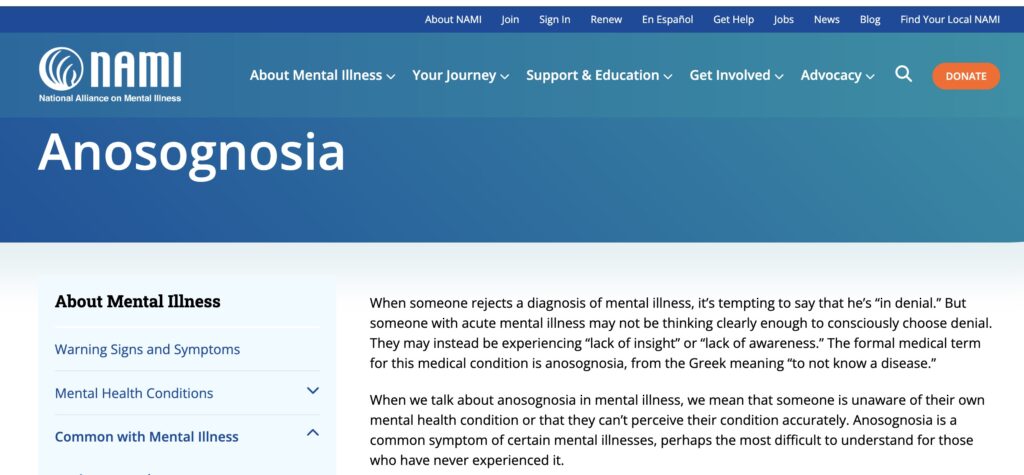
That quote goes to the heart of why the Travel & Tourism industry has huge problems solving its many problems: It lives in denial about their very existence — until the problem becomes a crisis, or even until it deteriorates further into a catastrophe. This seemingly irrational behaviour is worse than just denial. It actually has a clinically-proven medical term: Anosognosia.
Here are a few examples of how Anosognosia has taken hold over the years. I am using Thailand as an example, because it is the country I have covered most closely. But the same would apply in many other countries, too.
Editor’s Note: Those who reproduce any of the images below are legally required to include a link to this post as the source.
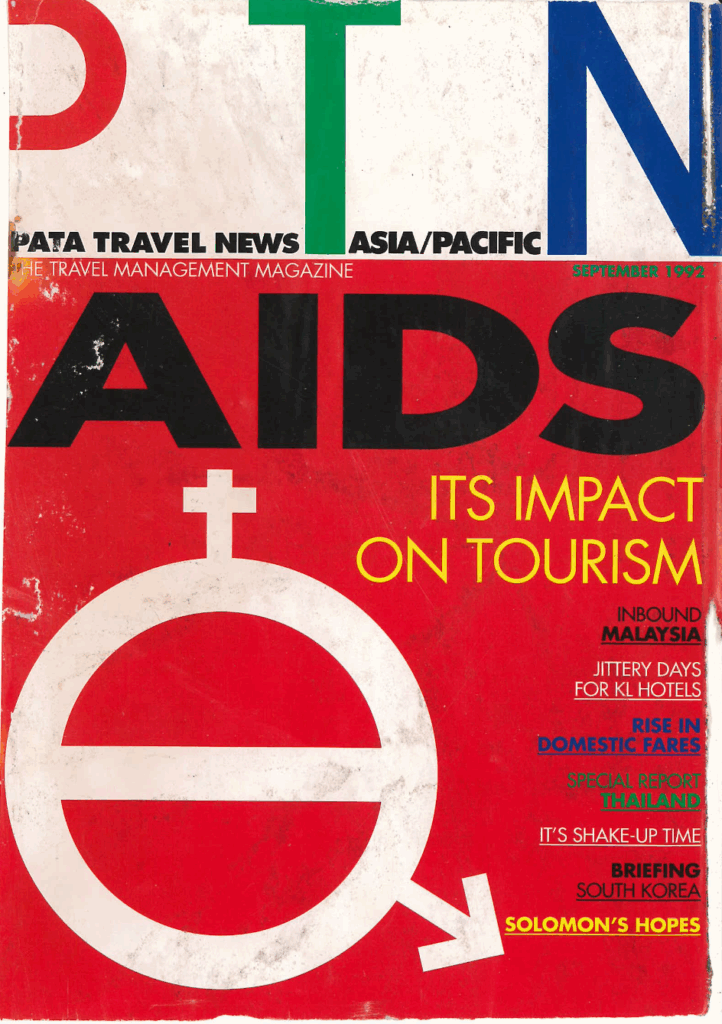
AIDS: I began covering Thai tourism in 1981. Two years later, Thailand reported its first case of AIDS. Due to rampant prostitution, sexual promiscuity and sharing of tainted needles by drug users, it spread rapidly. Naturally, that gained a lot of media coverage. The Thai tourism industry began wailing about the impact on the “image” of the country, along with efforts to sweep it under the carpet. It took one of the country’s leading anti-AIDS campaigners to kick the industry’s butt and tell its leaders that sticking their heads in the sand would not make the pandemic go way. Instead, it would destroy their businesses and Travel & Tourism as a whole. It was such blunt talk, plus the strong support he enjoyed from HRH Princess Chulabhorn, the youngest daughter of HM the late King Rama IX and a highly qualified medical scientist in her own right, to shake-up the industry executives and get them to join the prevention effort.





Destination management: Also in the 1980s, hotels in the then emerging beach resort of Pattaya were known for dumping sewage and waste-water into the sea. Municipal services could not keep pace with the growth in hotels, and there was not much choice. As more hotels were built, the waters in Pattaya bay became malodorous and toxic. The rapidly expanding resort was also facing a host of other serious developmental, social and environmental challenges. All these made headlines, and had the same impact. The industry’s initial reaction, too, was typical Anosognosia: First try and sweep it under the carpet, then blame the media for spoiling the “image of Pattaya.” One famous hotel got so badly hit by this negative image that it changed its advertising campaign to distance itself as being “Near Pattaya.” That is very similar to another marketing campaign under way today in the northern part of Phuket.


Jewellery shop commission rackets: Tour operators were making a fortune by over-charging tourists, especially first-timers travelling in tour groups. Shopping commissions are common industry practise worldwide but in Thailand many complaints were emerging about tourists being sold fake jewellery. Some tour operators got obscenely rich. Yes, it did hit the media eventually. Many frantic meetings were held but little could be done to address what was a well-entrenched business practise. Eventually, it spread from the European market to the Chinese, Taiwanese and Koreans, leading to the infamous “zero-dollar” tours which continued for years.


Because the Travel & Tourism industry could do nothing about the stories in the mainstream media, it vented its frustrations on the travel trade media, an easier target. The first step: Pull advertising. That gave the industry a sense of masculine power, the authority to play judge, jury and executioner, even if it meant targetting a scapegoat.
Neither ignoring the problems nor “punishing” the alleged culprits has ever done any good. Quite the opposite, in fact. Media exposure has helped mobiise public pressure to SOLVE the problems. A well-informed public, robust debate and a free press is THE SOLUTION, not the problem itself — the heart of a democratic process.
The inability to recognise, embrace and honour that fundamental truth shows the extent to which Anosognosia has taken hold industry-wide.
The three examples cited above are only the tip of the iceberg.
Over the years, Thai Travel & Tourism has faced multiple problems related to lax law enforcement: Child prostitution, wildlife smuggling, student travel card forgeries, counterfeit brand-name products, ghost guides, rogue taxi drivers, paedophiles, organised crime syndicates, encroachment in national parks, corruption, land grabs, deforestation, human trafficking, money laundering, tax evasion, etc.
Today, thanks to technology, that list has expanded to include scam centres, illegal casinos, front companies and foreign “investors” in Thai real estate, credit card fraud, identity theft, hacking, privacy violations, and much more. Even foreign policy challenges are mounting, as Travel & Tourism worldwide feels the heat of illegal wars and conflicts started by unaccountable global powers.
For the most part, these remain off the table until the problems strike close to home. Otherwise, the agenda remains in “politically correct” territory — AI, sustainability, airline capacity, visa bottlenecks, marketing campaigns, digital nomads, new airports, seaports and highways, investment promotion, etc.
As Anosognosia is a mental health challenge, Travel & Tourism can turn for help to its own high-growth sector: Health and Wellness.
Millions of people have all kinds of physical, mental, psychological problems, both self-inflicted or caused by external factors. Nearly all of these could have been solved if detected early. But they weren’t. Now, patients have to spend billions to deal with them. Some will survive. Others won’t. Either way, it’s good business for the medical fraternity. But it’s also a huge drain on other productive sectors of the economy, just like the AIDS crisis.
The same applies to Travel & Tourism. Like any ailment, abnormality or dysfunctional behaviour, its problems would have been best treated early. They weren’t.
The results are in plain sight all around. But, thanks to Anosognosia, it remains off the table.
Can anyone recall an industry conference on “Criminality in the Travel & Tourism sector” or “Environmental destruction in Travel & Tourism”? or on “Corruption in Travel & Tourism”? When was the last time we heard statistics on robberies, muggings, scams, cheating and fraud? Or how much water the industry consumes? How much garbage it generates? Food waste has only recently become topical, but it’s been rampant for years prior. So has “overtourism”, which is just a hackneyed name for badly-managed tourism, another problem which was on the boil for years before hitting the media.
Adding to this list is the insecurity and instability caused by intensifying global geopolitical and geoeconomic rivalries, all exacerbated by the growing ethnic, social, and civilisational divisiveness, what I call “The Other Global Warming.”

Do they pose an existential threat to Travel & Tourism? Sure they do. But all fall into the “Politically Incorrect” category. We’re supposed to just “think positive” and rally around “Meaningful Tourism Experiences.”
Sadly, the younger generation will pay the price of our Anosognosia. That makes a mockery of yet another bombastic industry claim: That we care about leaving behind a better world for the “future generation.”
It’s never too late, however. My “Politically Incorrect” webinars are designed to address our Anosognosia. If “The first step towards solving a problem is to recognise that there is one”, it’s time for Travel & Tourism to take that vital first step.
And Thailand, the “Land of the Free” but not yet the “Land of Fear”, is the best place to start.
Please sign up for my inaugural “Politically Incorrect” webinar on July 18. Click here for more details: https://www.travel-impact-newswire.com/2025/07/what-next-for-thai-tourism-life-after-65-sign-up-for-thailands-first-politically-incorrect-webinar/
